/ RESEARCH 002
TAREFORMHow much filament is left?
Before starting a long print, a studio needs the weight of the filament alone. This bench station concept pairs a weighing platter with a slip for the empty reel’s weight.
CNSURPR design study · No validated hardware
Try the weighing example ↘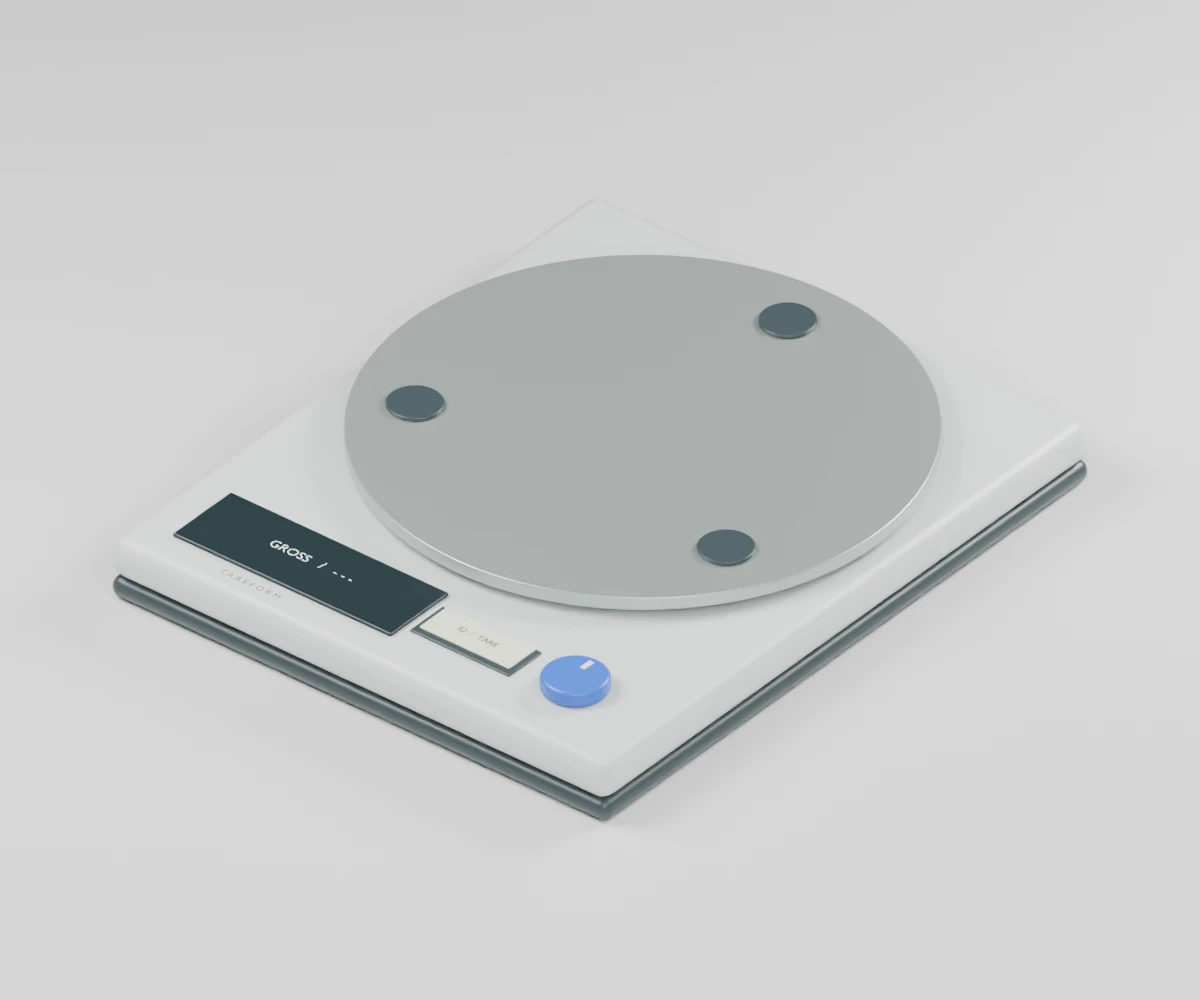 DESIGN STUDY · v0.1
Drag to orbit, or use the buttons. No automatic motion. Geometry illustrates an idea; it is not a validated assembly.
01 / THE WORKFLOW
A 640 g reel does not hold 640 g of filament.
Try an empty reel weight of 210 g. This browser example subtracts the tare to estimate 430 g of filament. All values are illustrative.
Gross only. Enter the verified empty weight of this reel.
02 / INDUSTRIAL DESIGN
A reel, a slip and a dial
Six original renders use the same geometry as the 3D viewer. The blue reel is a scale reference.
Open the design poster ↗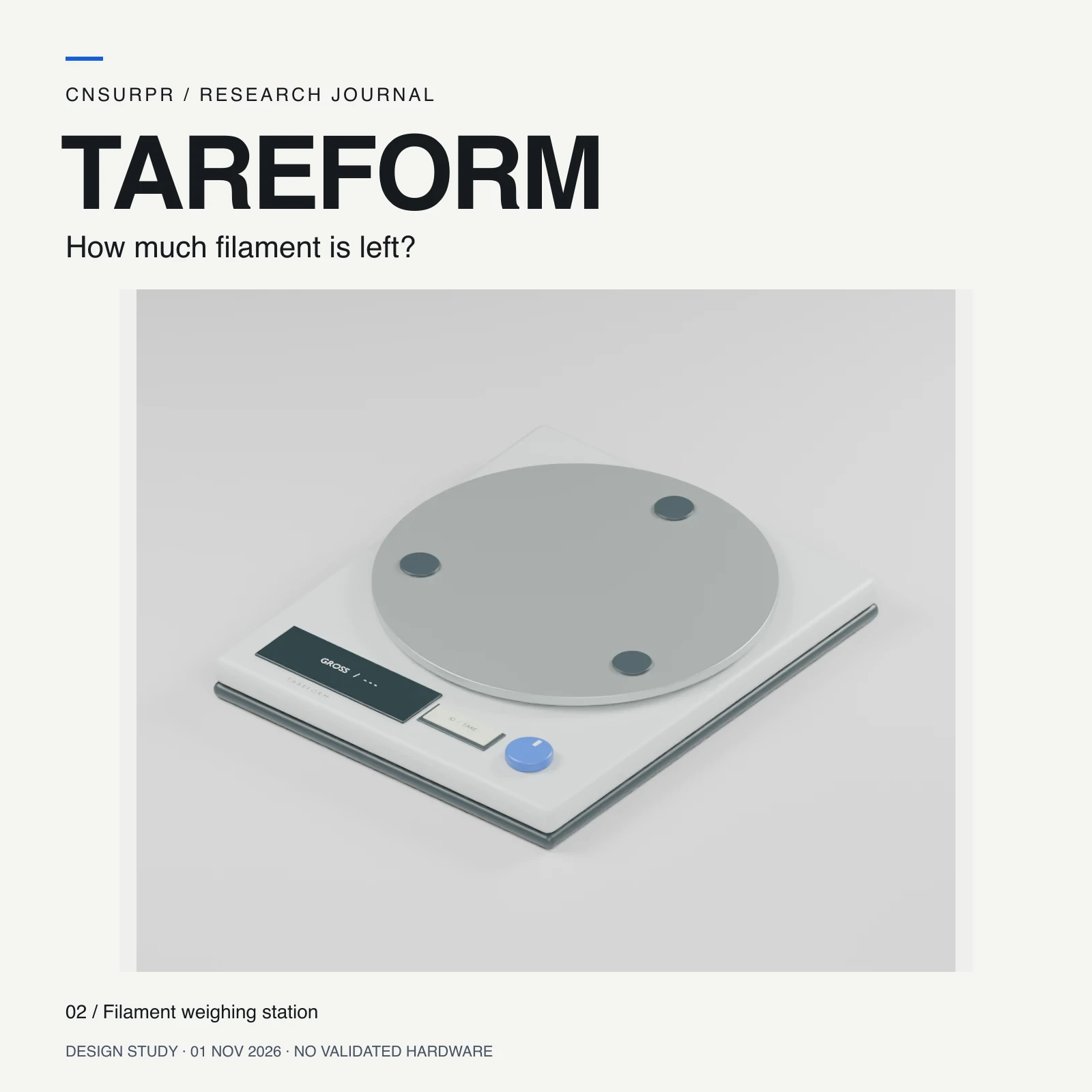
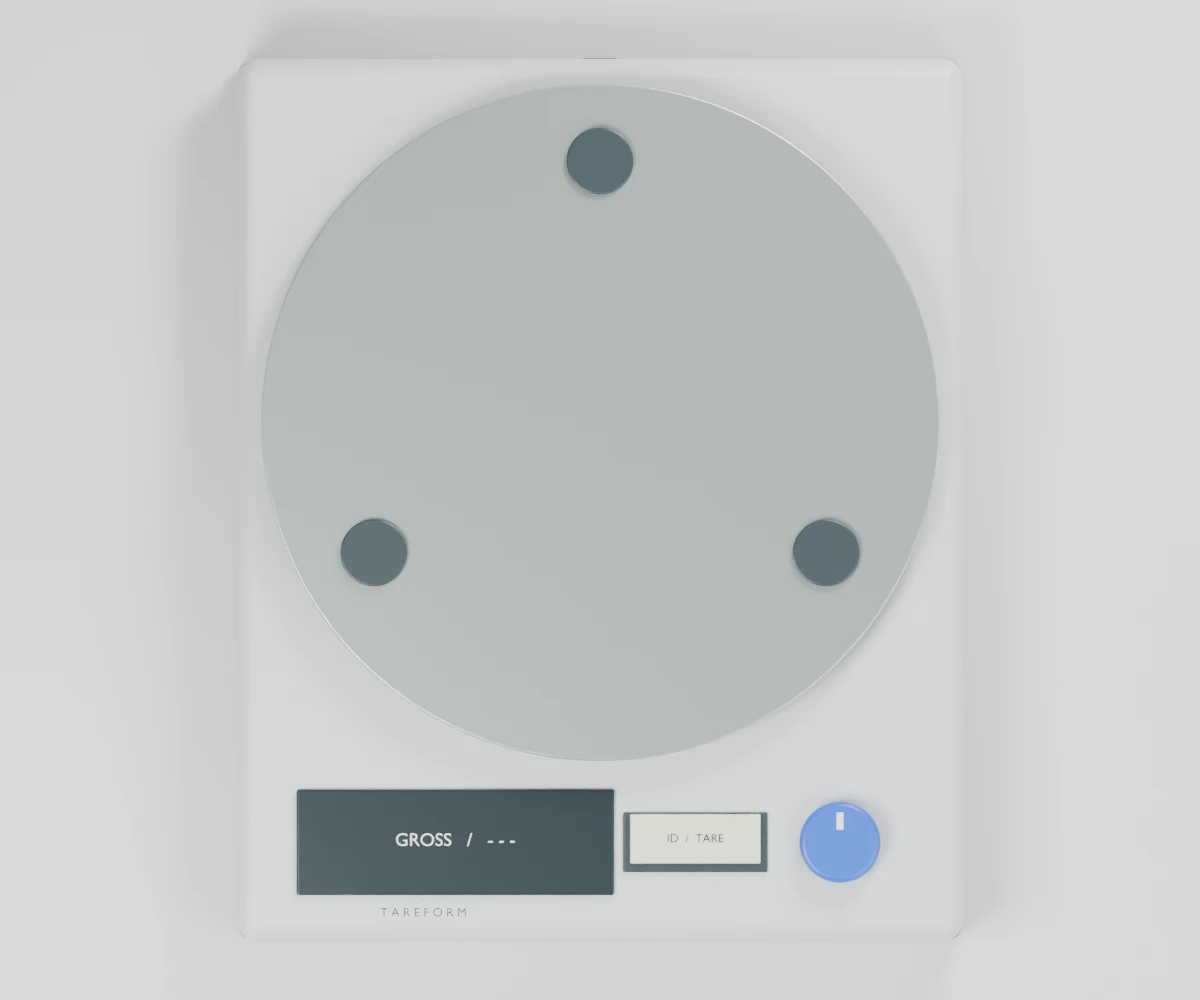
01 / Platter and controls
The 192 mm platter sits toward the back, leaving the screen and dial at the front.
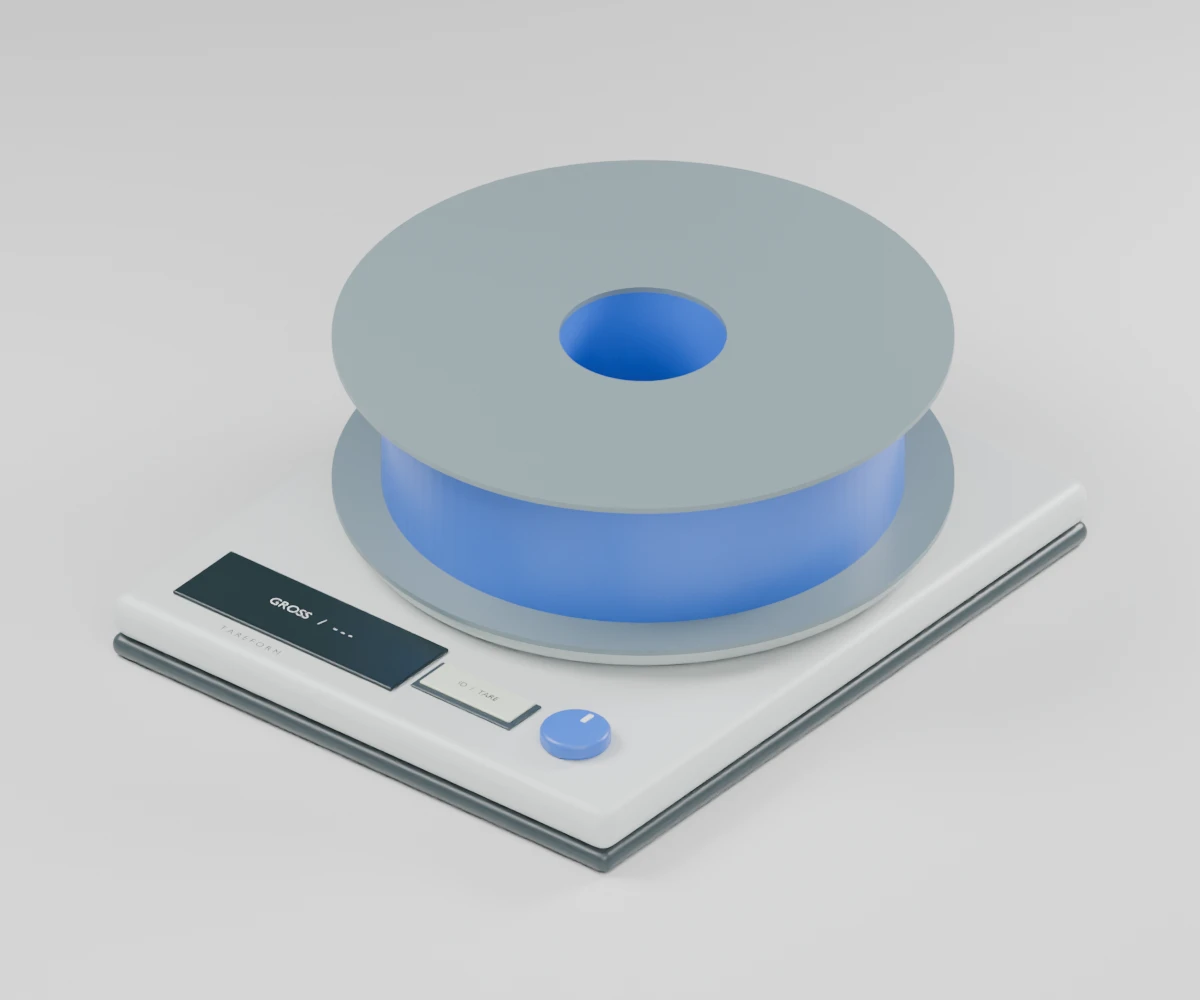
02 / Check the sightline
An original 200 mm reference reel illustrates a flat loading position. Physical fit still needs checking.
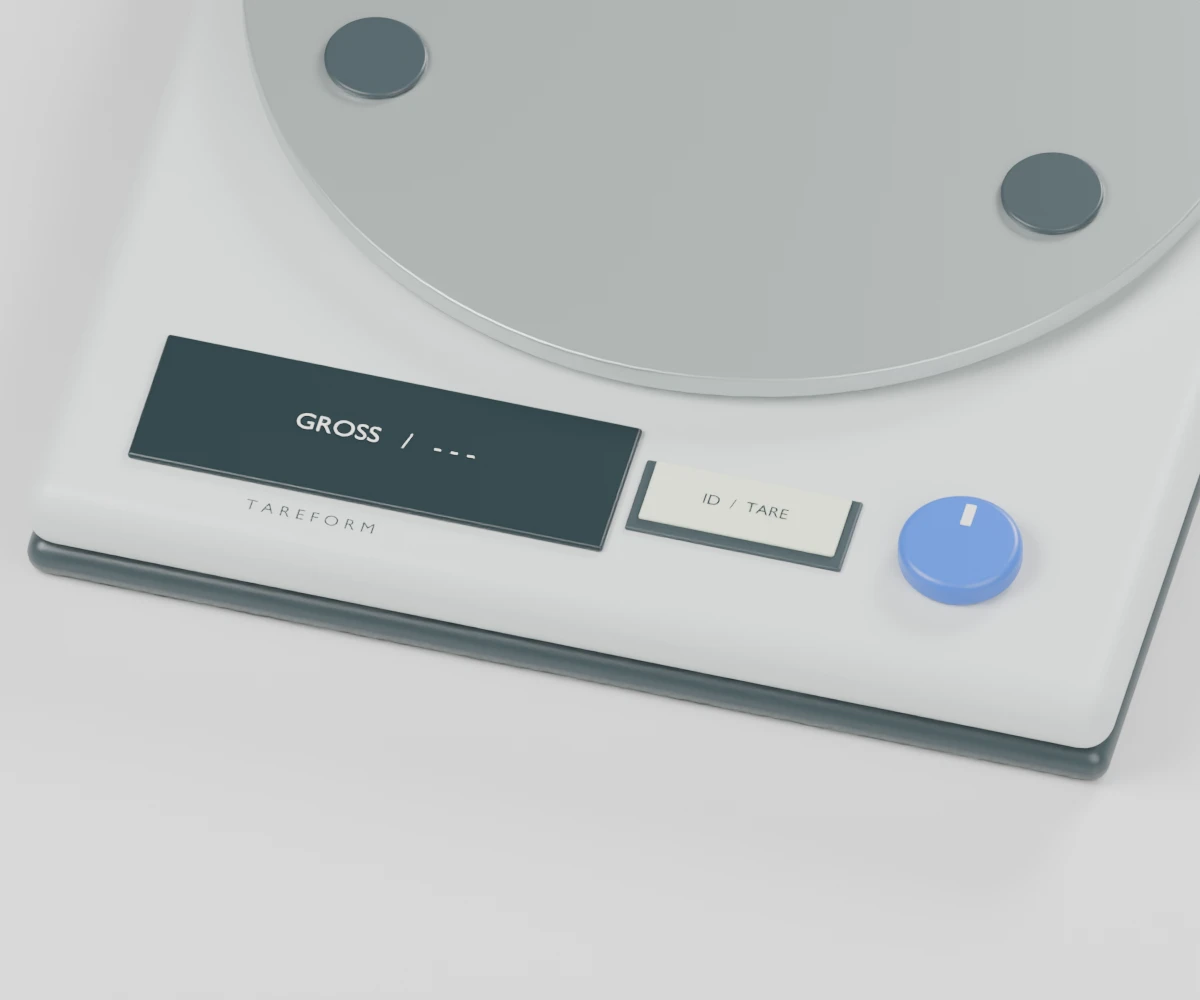
03 / Gross weight first
The display sketch opens in GROSS mode. The dial would confirm the empty reel value before showing net weight.
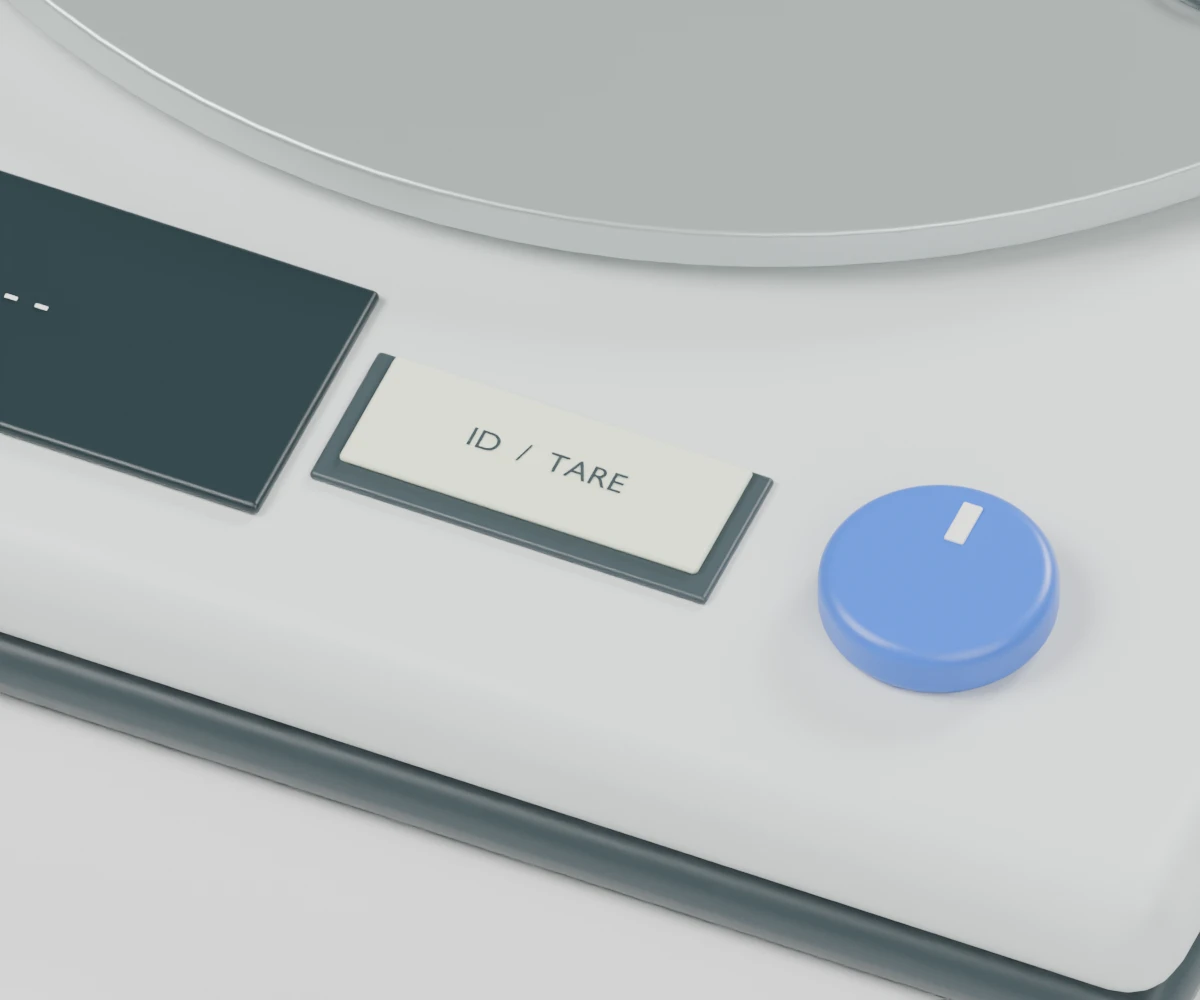
04 / Match the reel
The removable paper slip would carry the reel ID and its measured tare. The operator reads the slip manually.
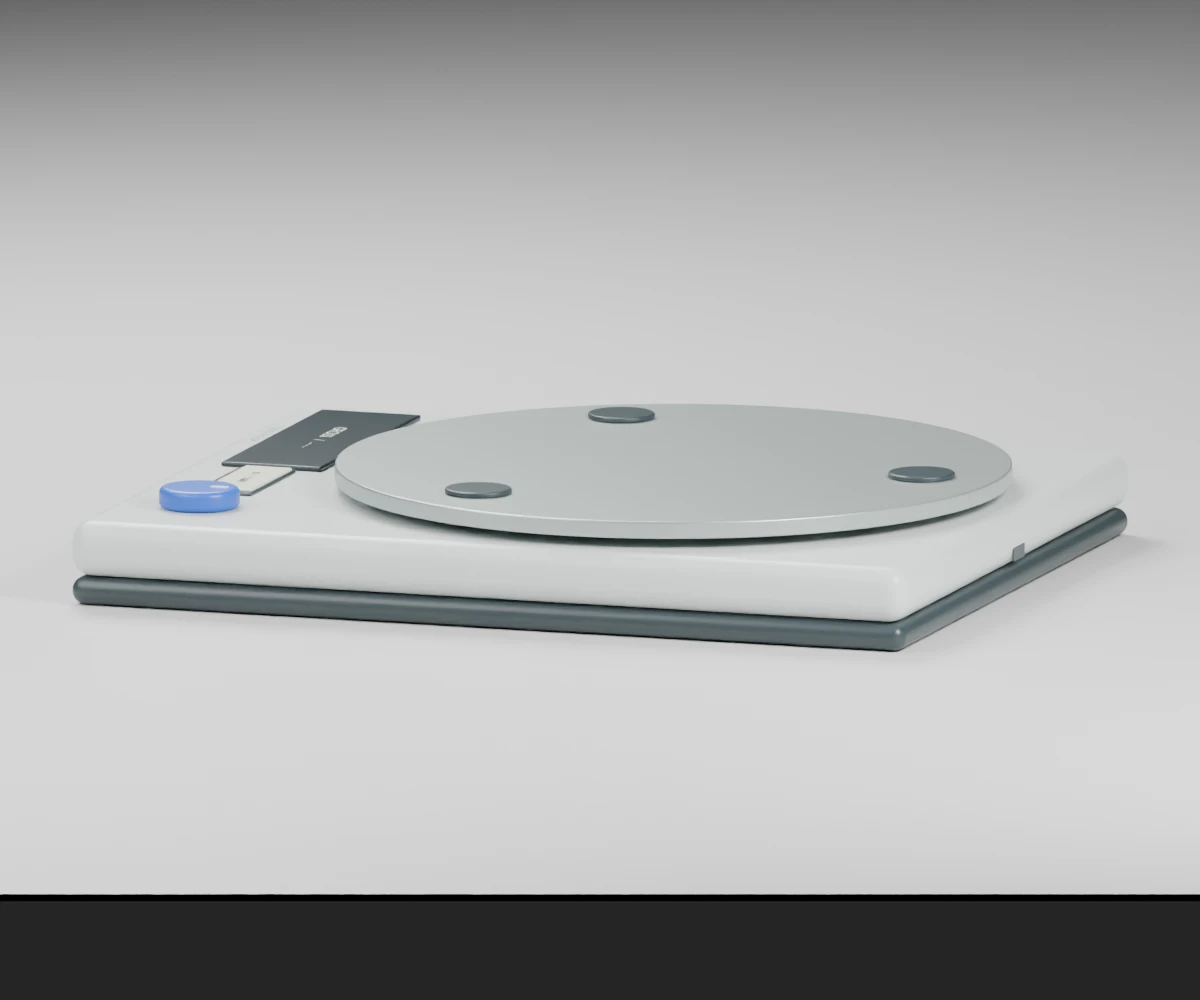
05 / Keep the load on the platter
The visible gap separates the weighing surface from the housing. Rubbing would bias a reading.
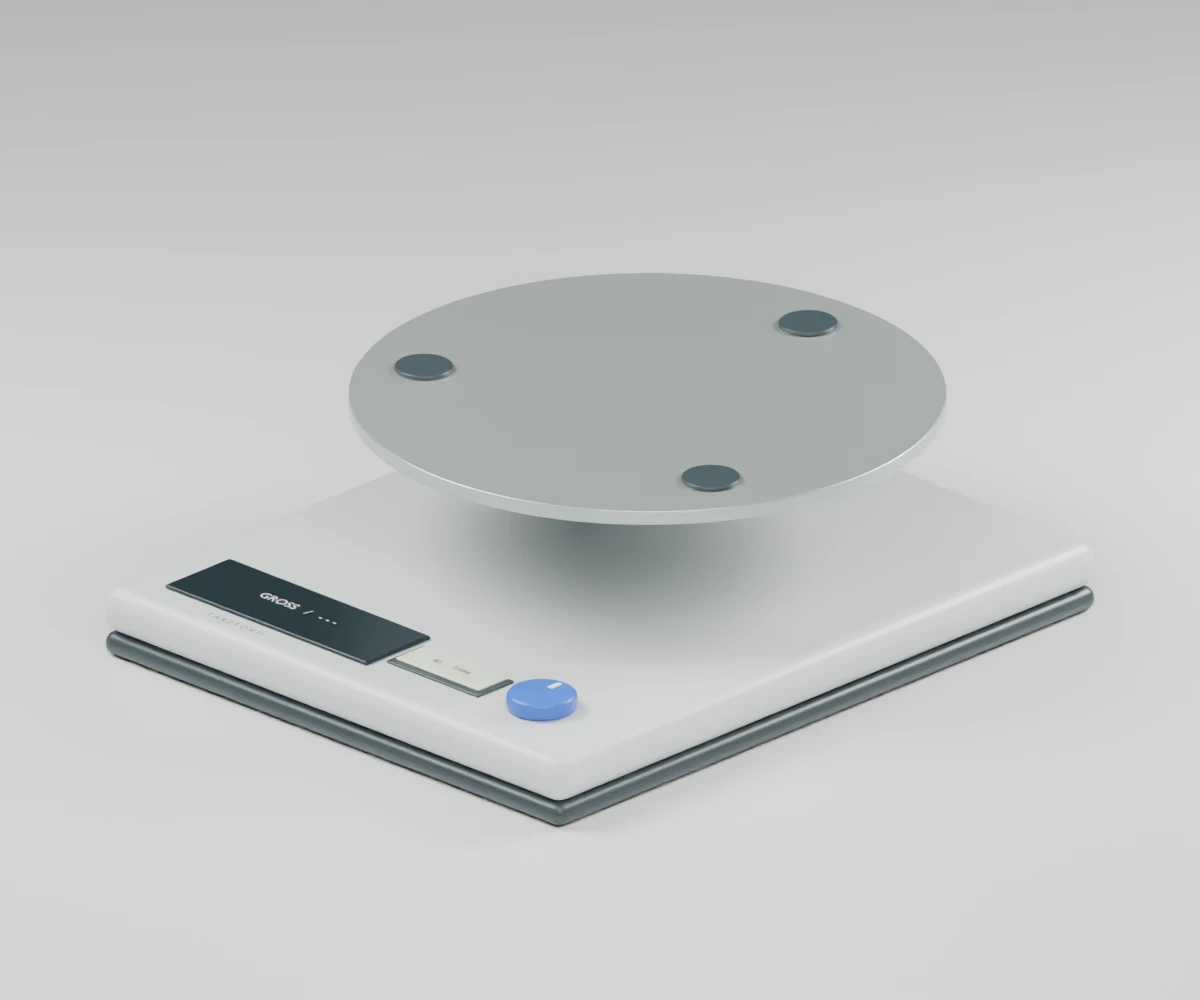
06 / Lift the platter
The split illustrates the moving platform. Mounts, overload stops and the force path await a prototype.
03 / RESEARCH
Is a separate tool worth the bench space?
Why investigate now?
Prusa documents manual weighing, and one operator describes confusing the weight fields. For the next 30–90 days we will look for independent examples of wrong-tare entries and buying intent among multi-reel studios.
What would rule it out?
A kitchen scale and a written label can already do the arithmetic. Connected inventory scales also exist. Over 3–6 months, the question is whether a dedicated slip and dial measurably reduce mistakes or time. The addressable accessory market remains unknown.
04 / MANUFACTURING
What the first bench unit must prove
- Envelope and assembly
- Housing target 206 × 250 × 24 mm. Prototype in PETG. A separate 192 mm platter would attach to the moving end of a load cell.
- Component evidence
- SparkFun lists a TAL220B beam and HX711 breakout at US$15.50 and US$4.95. These two retail references omit the display, controller, enclosure and calibration.
- Bench comparison
- Compare with a plain scale and handwritten label across ten partial reels. Record time, incorrect tares, corner loading and drift. No physical trials yet.
FAQ
Buyer questions
What if the empty reel weight is unknown?
Keep the gross reading. To estimate net mass, use an individually measured tare or mark a comparable reel value as an estimate. A 15 g tare error shifts the estimate by 15 g.
Does the station read NFC tags?
The proposed station uses a handwritten slip. A user could separately enter a result into their inventory app. Automatic tag reading and data transfer are outside this design.
Can a buyer order a sample or use it for billing?
Only digital geometry exists. The target is internal stock checks. There is no tested unit, quote or approval for trade use.
Sources reviewed on 1 November 2026
- Prusa Knowledge Base ↗
The manual describes weighing and updating the value in the app.
- User report · 15 May 2026 ↗
One operator describes uncertainty over the weight fields. Frequency and willingness to pay are unknown.
- CONTEXT · 13 Oct 2026 ↗
Worldwide entry-level printer revenue rose 36% year over year in Q2 2026. Sales of standalone weighing stations were outside this figure.
- SpoolmanScale ↗
An existing maker project already links spools and inventory using a scale and tags.
- SparkFun · TAL220B ↗
Candidate load cell, retail listing.
- SparkFun · HX711 ↗
Candidate amplifier breakout, retail listing.
- NIST · Weighing and scales ↗
The intended use matters when assessing commercial weighing requirements.
How does your studio track partial reels?
Share reel types, your current weighing method or a recurring error with the research team.