/ RESEARCH 001
ROOTLINKA new life for the wet end.
What if maintaining a plant sensor meant replacing only its probe? An industrial design study for indoor growers, with the assumptions left visible.
Research observation · No validated hardware
Explore the evidence and open questions ↘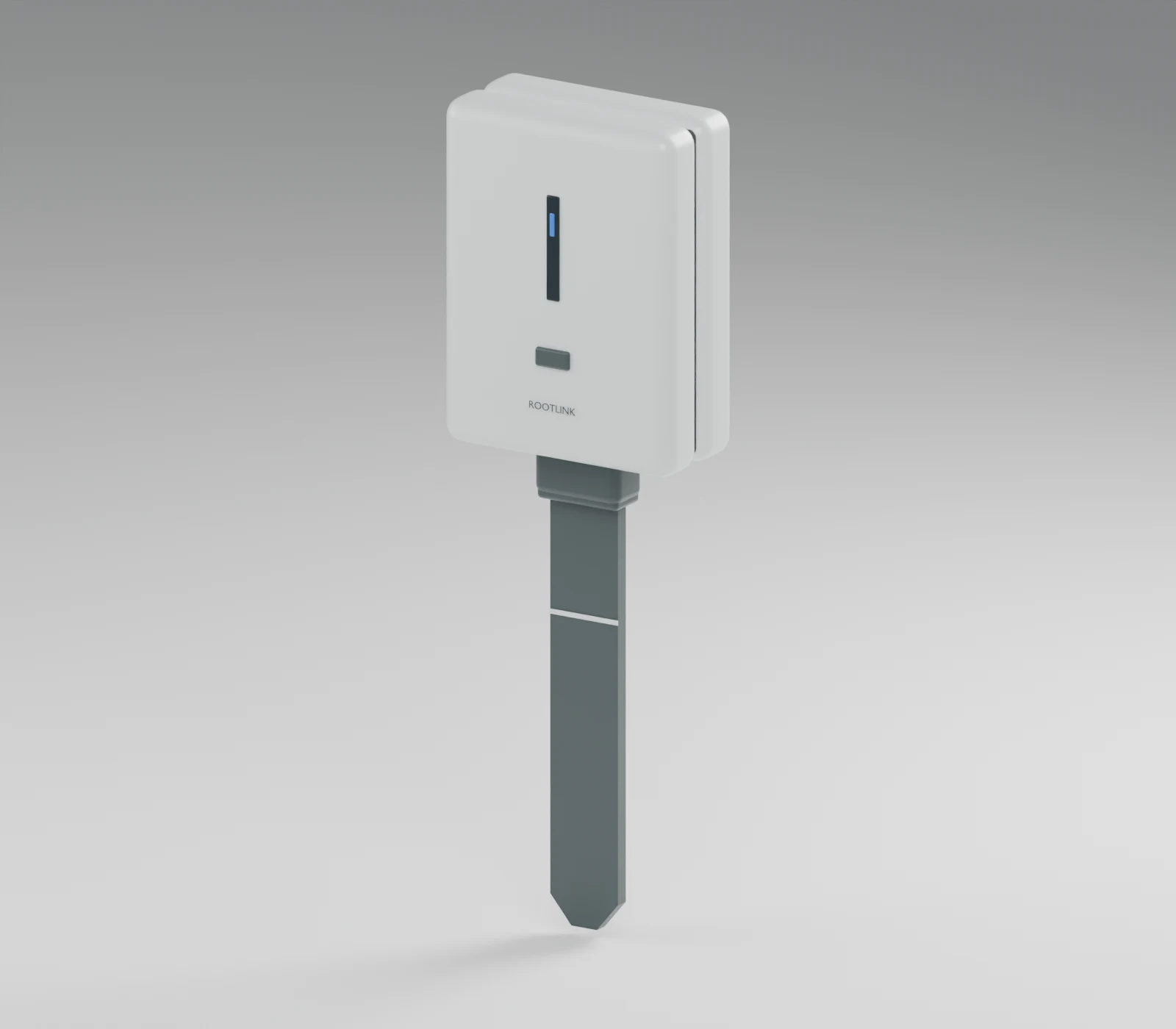 DESIGN STUDY · v0.2
Drag to orbit, or use the buttons. No automatic motion. Geometry illustrates an idea; it is not a validated assembly.
Replaceable wet-end concept
Dimensions, materials, space
Demand and advantage unproven
THE RESEARCH QUESTION
An opportunity to investigate. Not a breakout forecast.
Why look now?
Smart-home support for soil sensors is expanding, while plant-ownership research gives a neighboring demand signal. Together they justify investigation—not a sensor sales forecast.
Our 30–90 day and 3–6 month hypothesis is that some multi-pot households may value easier maintenance. Purchase intent, fault frequency and willingness to pay still need direct evidence.
What argues against it?
Existing open-source and commercial sensors already address connectivity and calibration. A replaceable probe could add sealing problems, contact failures and cost. Replacing a cheap whole device may be simpler.
We have no verified sensor market size, search-growth series or sales uplift. No growth probability is assigned. Review checkpoints: 28 Nov, 28 Dec 2026 and 27 Jan 2027.
ONE MODEL. SIX PERSPECTIVES.
Designed to be examined.
Original digital renders from the same v0.2 geometry. Not photographs of a manufactured product.
01 / A quieter plant companion
A pale rounded enclosure, graphite probe and a narrow status window. The indicator is a visual proposal, not a working sensor display.
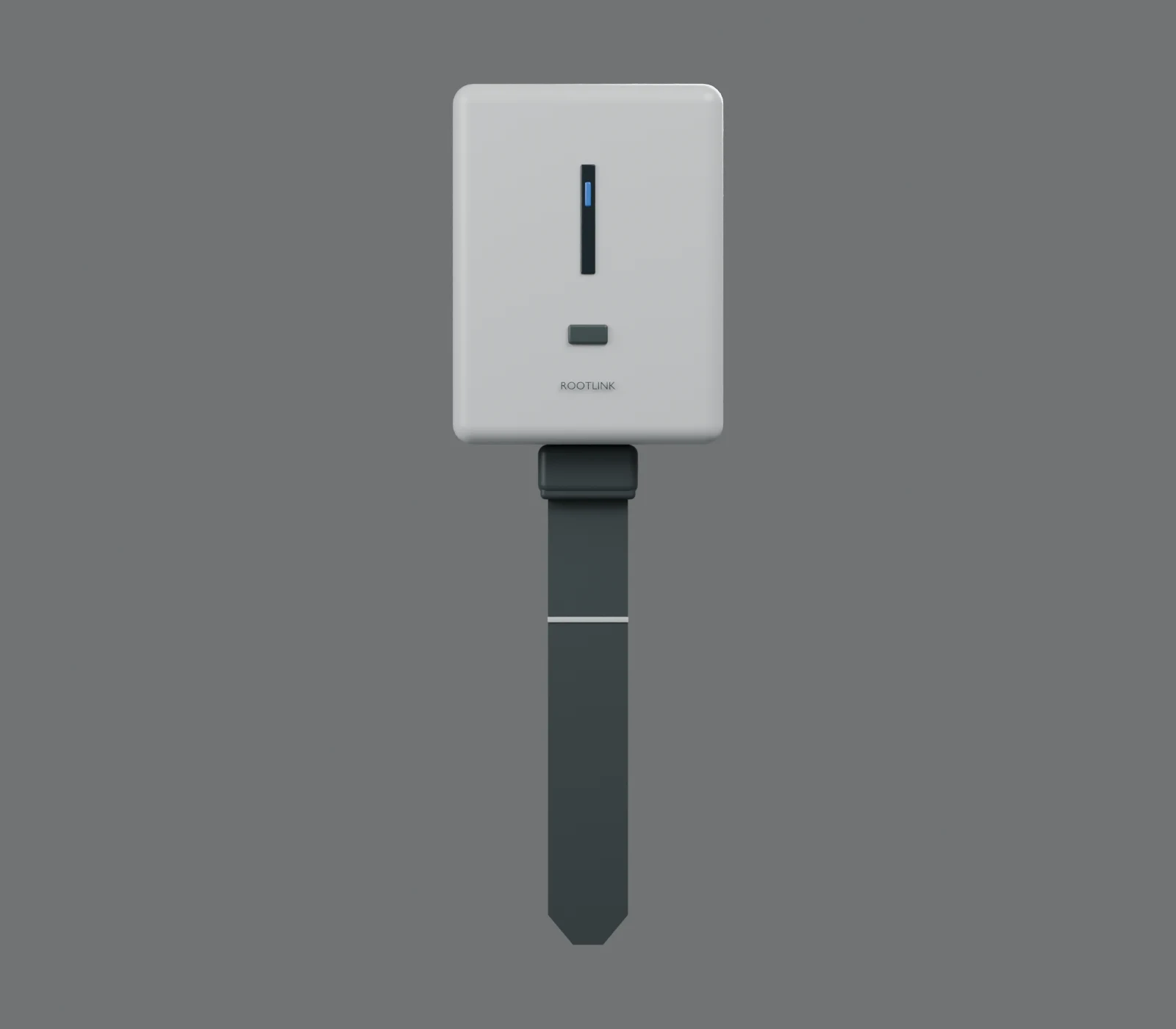
02 / Read at a glance
A single window and button are proposed. Errors and normal readings must ultimately be distinguishable without relying only on color.
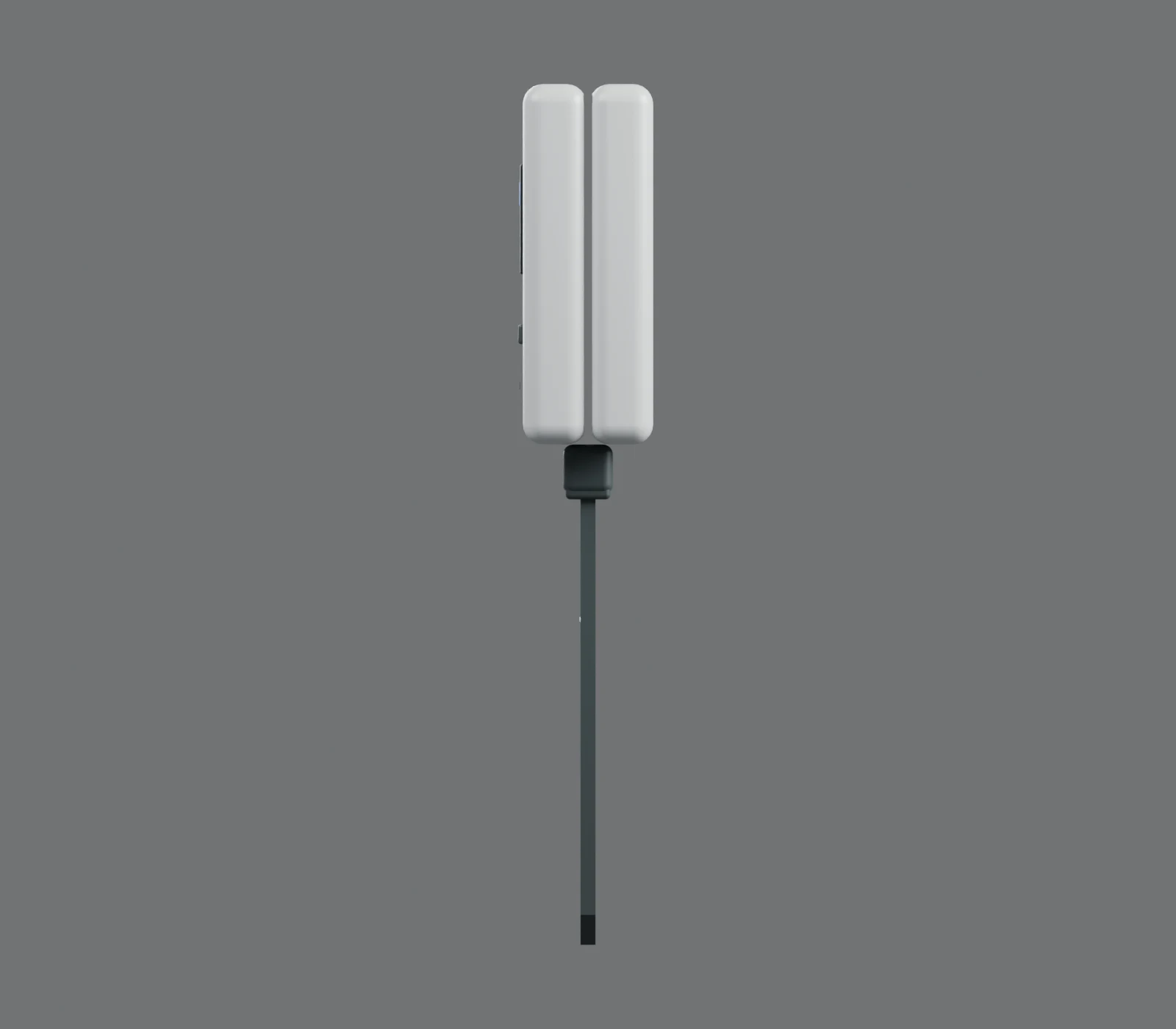
03 / A compact envelope
Housing: 54 × 26 × 72 mm; total height: 172 mm. These are concept dimensions, not released manufacturing tolerances.
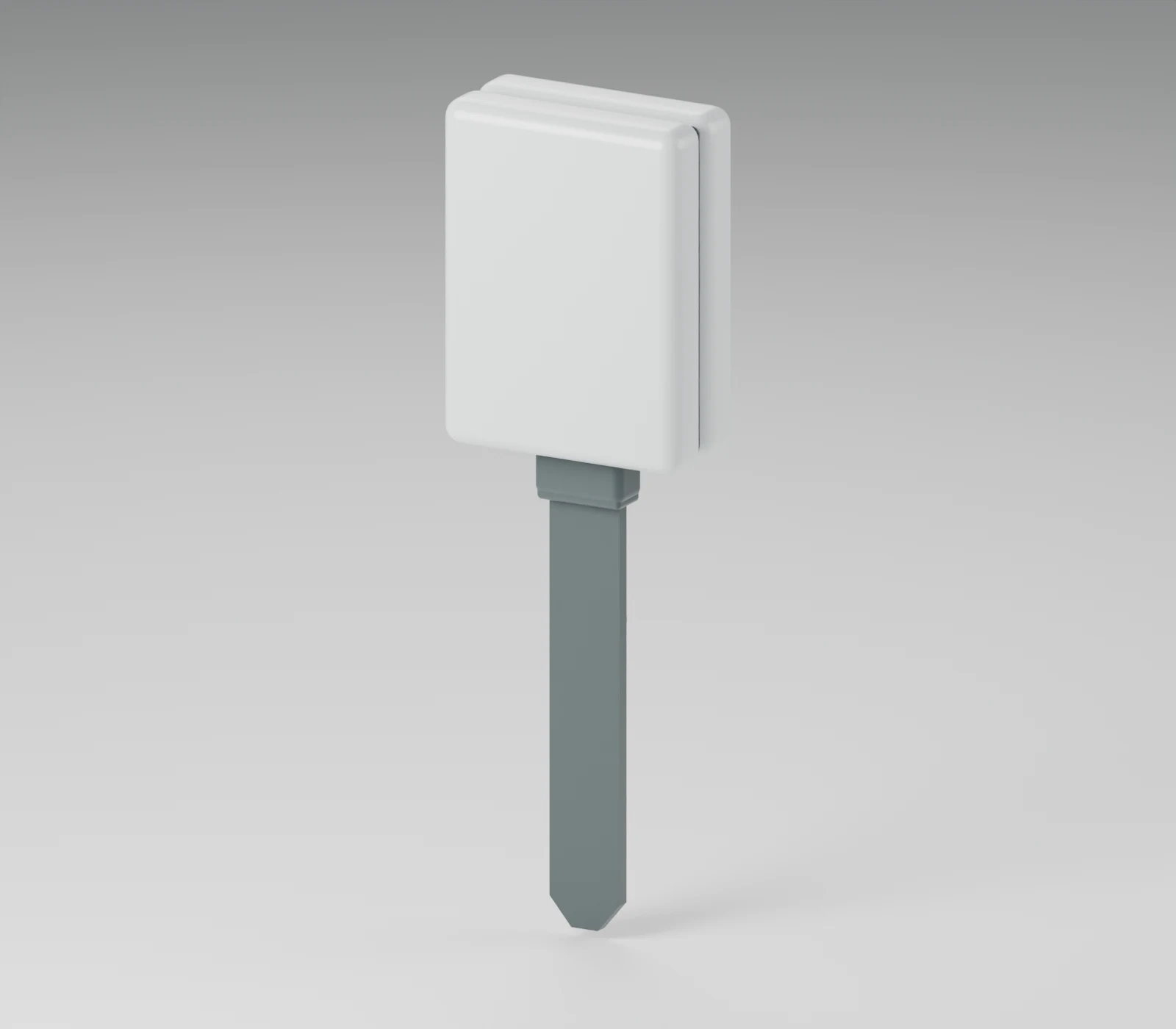
04 / Access for maintenance
Two shell halves suggest service access. Fasteners, seals and battery access have not been engineered.
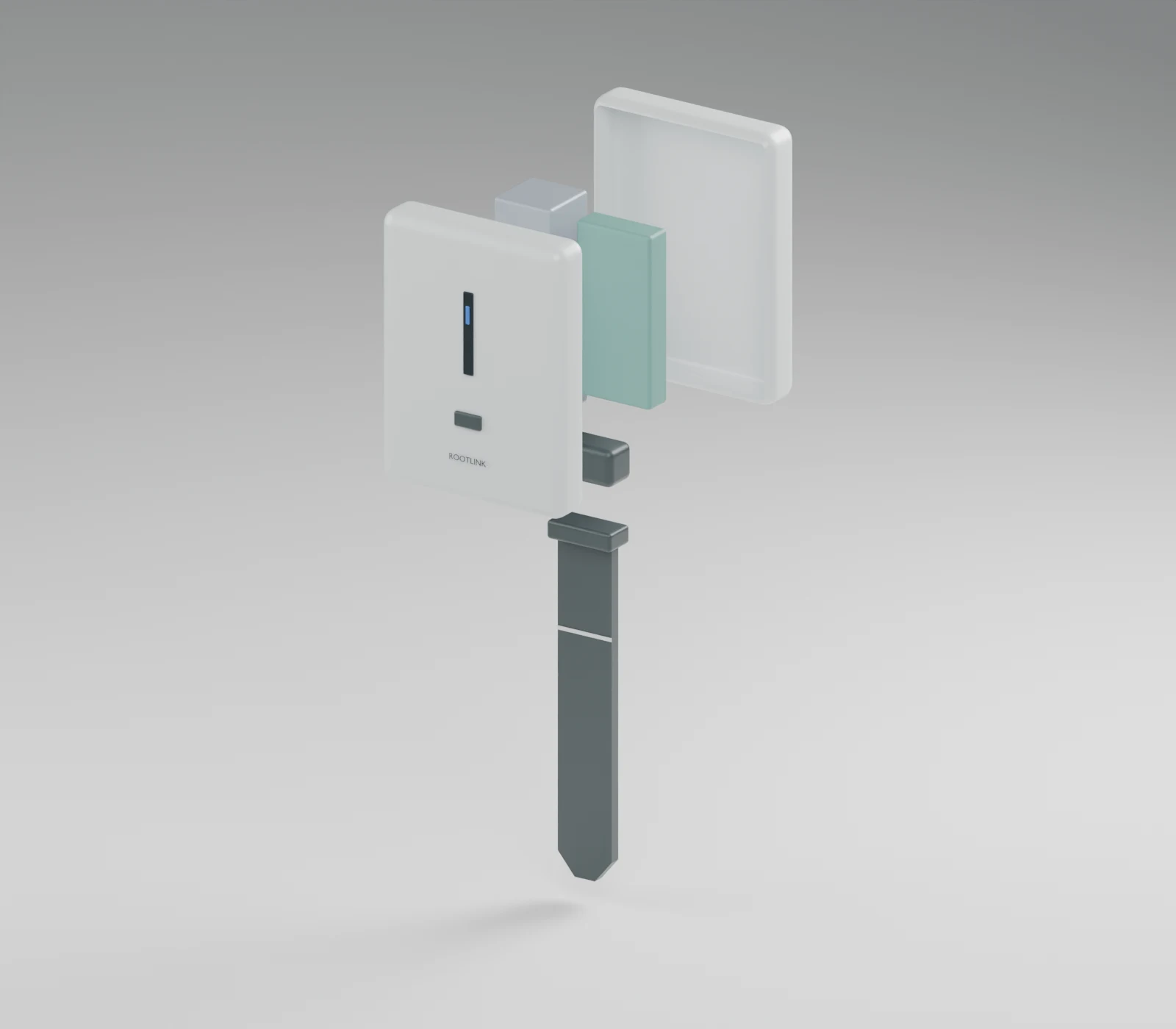
05 / Keep the head. Replace the probe?
The wet-end replacement path is the central hypothesis. The connector position is illustrative; its seal, contacts and retention are unresolved.
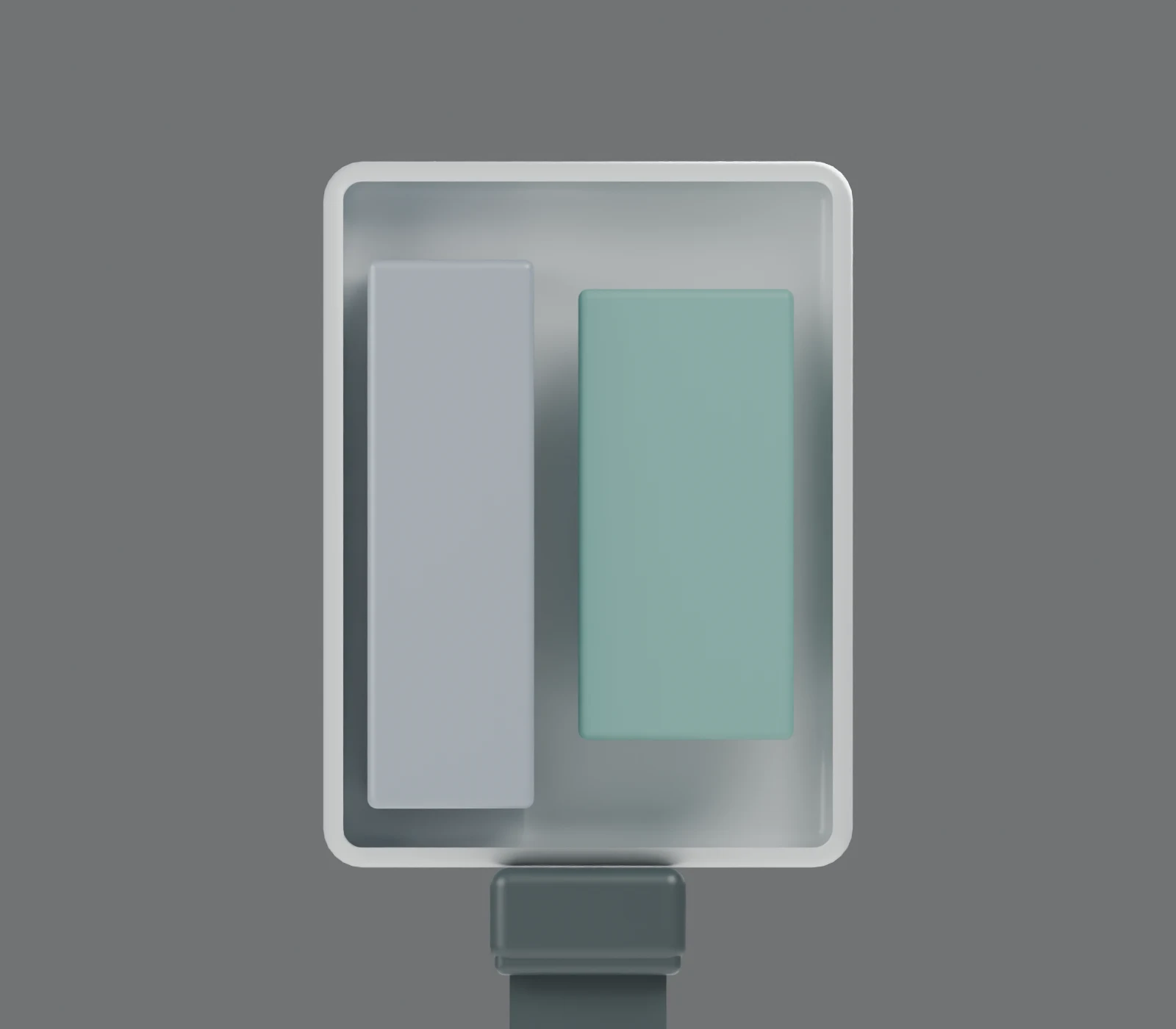
06 / Space before circuitry
Reserved envelopes: 17 × 17 × 56 mm for a battery/holder and 22 × 8 × 46 mm for electronics. Colored blocks are placeholders, not selected parts or a finished PCB.
MANUFACTURING BRIEF
A starting point. Not production drawings.
- Intended use
- Indoor potted plants; relative wetness indication
- Concept dimensions
- 54 W × 26 D × 72 H mm housing; 172 mm overall height
- Probe / shell
- 16 × 3 × 90 mm probe; nominal 2 mm shell
- Prototype process
- PA12 printed housing; encapsulated capacitive PCB probe to investigate
- Electronics candidate
- ESP32-C6-MINI-1 family; exact module, RF layout and firmware undecided
- Power candidate
- Single AA plus boost converter, space study only; no battery-life claim
- Cost and supply
- No verified BOM price, supplier quote, stock, MOQ or delivery date
Before a physical pilot
Select parts and verify availability; design contacts, seals, antenna clearance and fasteners; then test substrate calibration, drift, probe replacement, power protection and update recovery. Market-specific radio, material, battery, labeling and recycling obligations must be assessed before any supply claim.
FAQ
Questions worth asking.
Can I order ROOTLINK or request a finished sample?
No. This is a published design study. There is no validated physical prototype, qualified supplier or confirmed sample schedule. You can share a use case for future evaluation.
Does it work with Matter or Home Assistant?
That is a research direction, not an implemented feature. Supporting chips and ecosystem changes do not constitute product compatibility testing or CSA certification.
How is it different from a low-cost soil sensor?
We are testing the idea of keeping the electronics and replacing only the wet-end probe. Whether that improves cost, reliability or waste compared with replacing a low-cost complete device remains unproven.
Is the reading accurate for every soil or growing medium?
No accuracy is claimed. Calibration, salinity, substrate, contamination and long-term drift require physical testing. Relative wetness must not be labeled as measured volumetric water content.
What does the 3D model prove?
It makes the current proportions, shell split and spatial assumptions inspectable. It does not validate electronics, waterproofing, assembly, manufacturing, safety or market compliance.
SOURCE NOTES
Follow the evidence.
Sources reviewed 30 October 2026. Ecosystem, adjacent consumer research and engineering literature are different types of evidence; none establishes our product’s market fit.
- Home Assistant 2026.7 ↗2026-07-01
Matter soil-moisture sensor support is an ecosystem signal. It does not validate ROOTLINK compatibility or demand.
- XIAO soil moisture sensor · Matter / Thread ↗README reviewed 2026-10-30
An existing open-source implementation covers Matter over Thread and calibration. These features alone are not a unique advantage. We have not tested this project.
- Floral Marketing Fund · Houseplant purchasing trends ↗2019 / 2021 / 2025 comparison; publication date unconfirmed
An industry-funded summary reports changes in plant ownership and spending. Full sampling methods were not reviewed. Plant purchases are not sensor sales or sensor market size; 2026 intentions are not actual sales.
- Sensors 2025, 25(2), 343 ↗2025
Research on SEN0193 calibration reinforces the need for soil-specific validation. Its results cannot be transferred to our unbuilt probe.
- Third Reality · Smart Soil Moisture Sensor Gen2 ↗Firmware entry 2026-03-23
A maintained commercial alternative already exists. This is competitive counterevidence, not a performance comparison.
HELP SHAPE THE QUESTION
What would make this useful to you?
Share your growing setup, target market or maintenance problem. This opens a research discussion, not an order or a delivery commitment.