· FUTURE CONCEPT
TACT RelayRecord motion and contact
An open palm loop carries a curved camera pod above two tactile fingers. This handheld teaching concept explores synchronized visual, motion, jaw-width and contact records for robot-learning teams.
Original design · Prototype validation pending
View the design poster ↗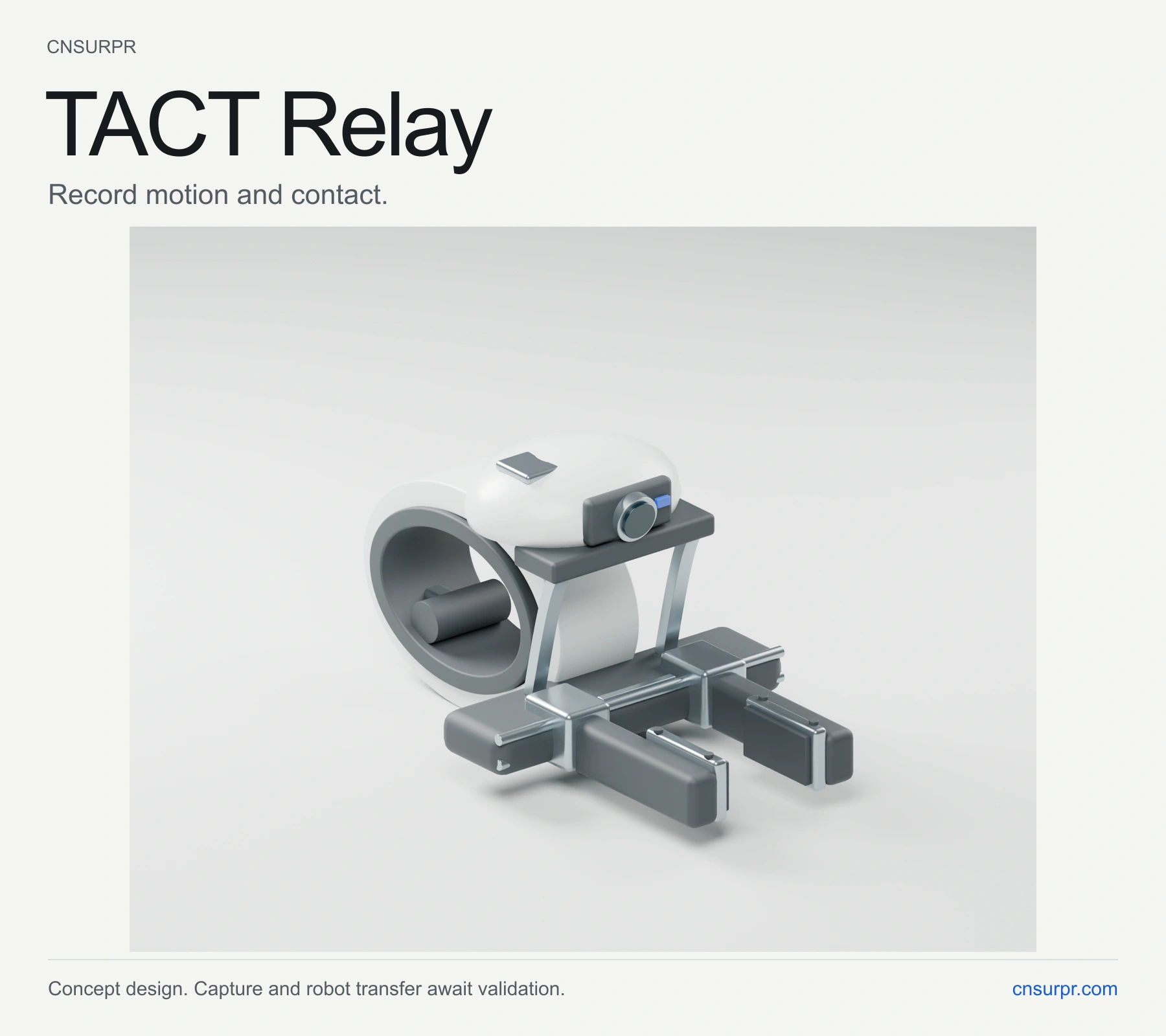
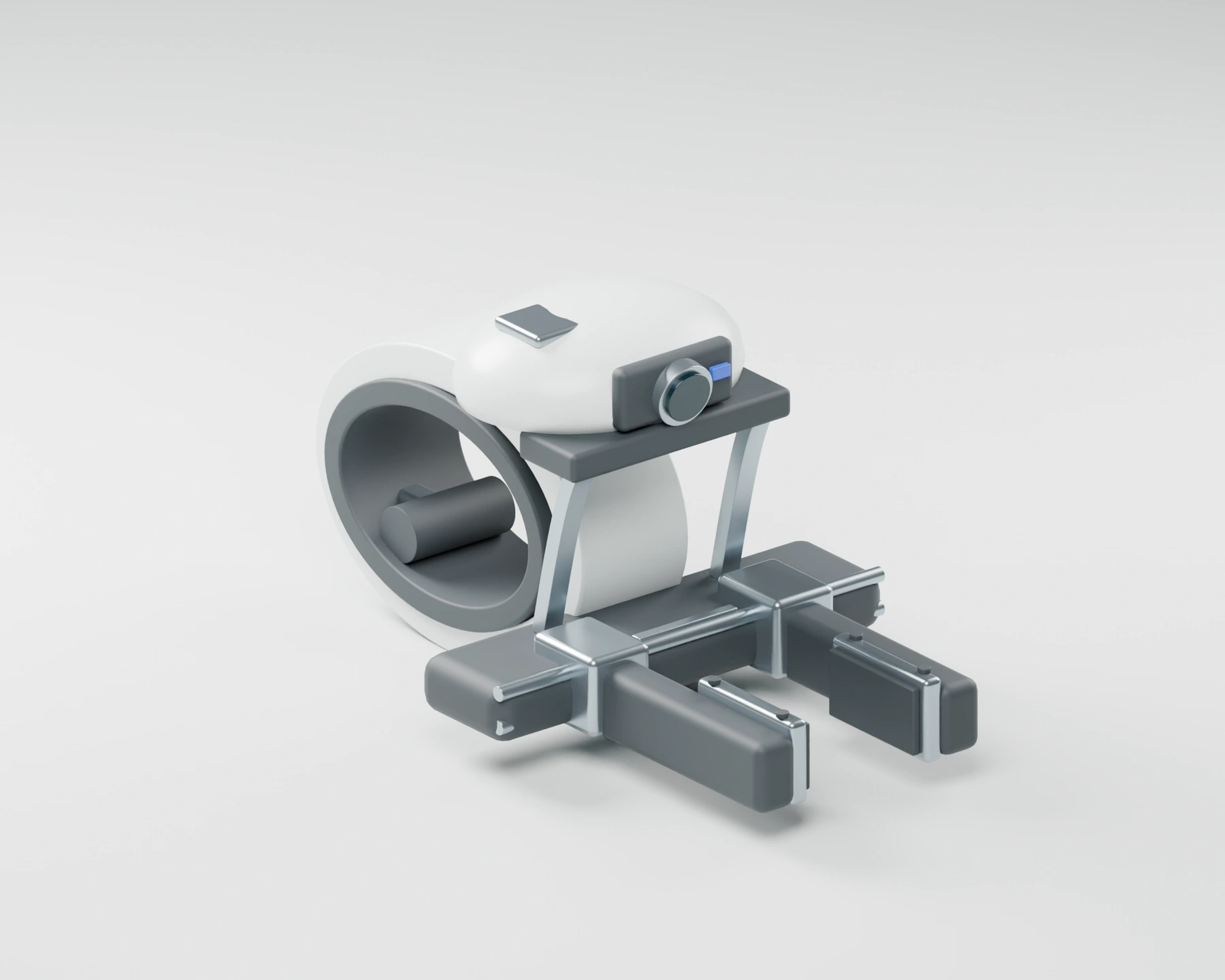 DESIGN STUDY · 1.3
Drag to orbit, or use the buttons. No automatic motion. Geometry illustrates an idea; it is not a validated assembly.
Why design ahead in this category?
Robot-learning teams need usable demonstrations that preserve contact as well as visible motion. Industrial adoption, commercial training systems and open tactile tools support exploring a smaller capture instrument. They do not establish demand for this particular device.
Adjacent industrial robot installations
+11%IFR · calendar 2025 · over 600,000 new industrial robots worldwide. This is broad industry context, not handheld teaching-device sales.
Read source ↗Adjacent robotics business revenue
$96mTeradyne · Q3 fiscal 2026, ended 27 September · Robotics segment includes cobots and mobile robots. No trainer-unit breakdown.
Read source ↗Open tactile development route
Skin + IMUOpenTac documents flex-PCB skins, readout and IMU-equipped boards. Documentation reviewed 18–19 November; no sensor built or run by our team.
Read source ↗The product advantage to test
The proposed value is repeatable contact-cartridge placement, calibration records tied to each cartridge, and a clear per-demonstration quality receipt. Reduced unusable data and shorter service recovery are comparison targets. There is no tested advantage or established moat yet.
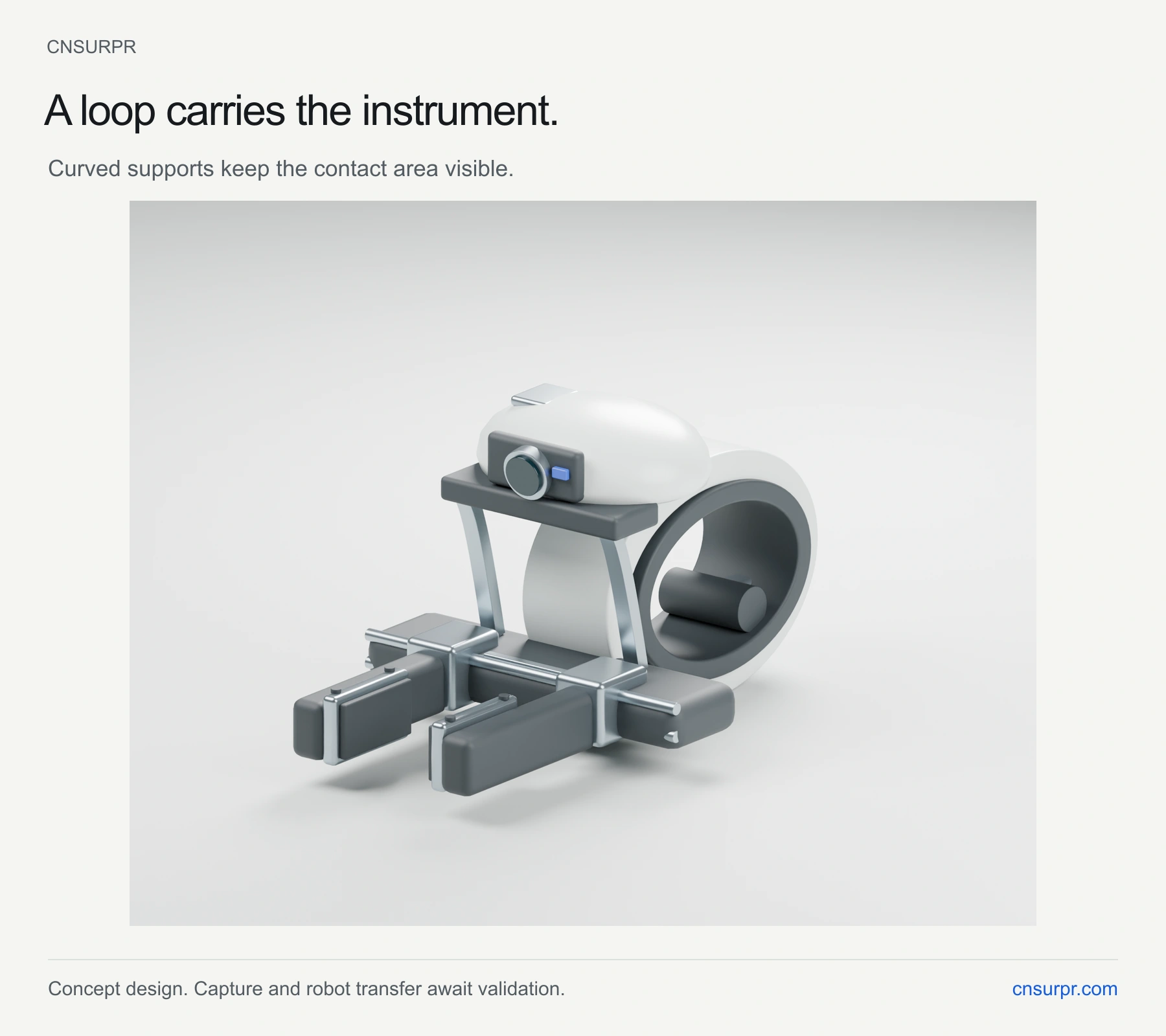
A loop with physical supports
The pod is carried by curved metal bridges. Hand clearance and support strength require engineering.
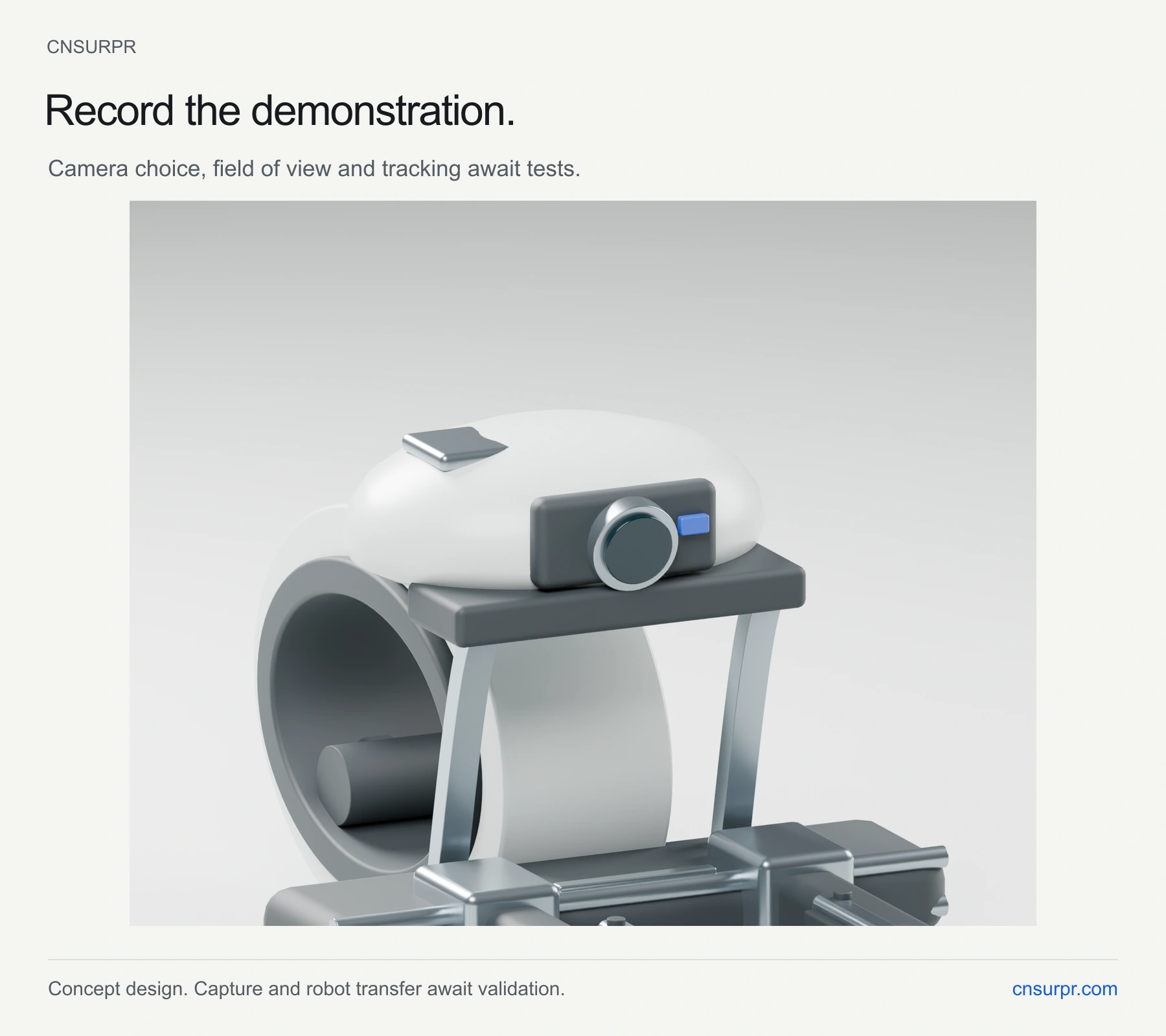
Observe the demonstration
The front window represents an RGB camera path. Lens choice, field of view, IMU calibration and tracking are untested.
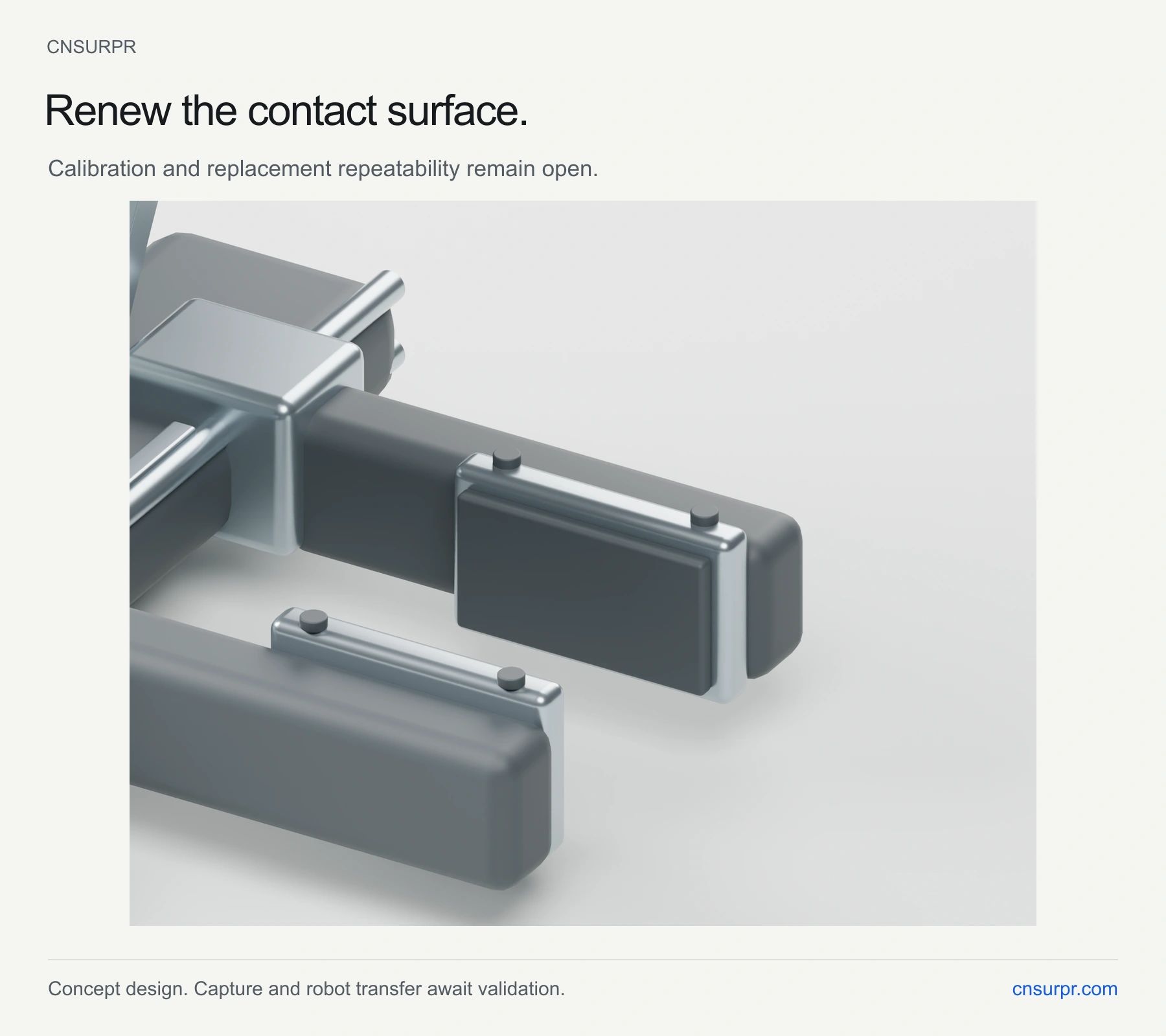
Service the contact surfaces
Removable skins and carriers express a service route. Taxel layout, normal/shear calibration and remount repeatability are not fixed.
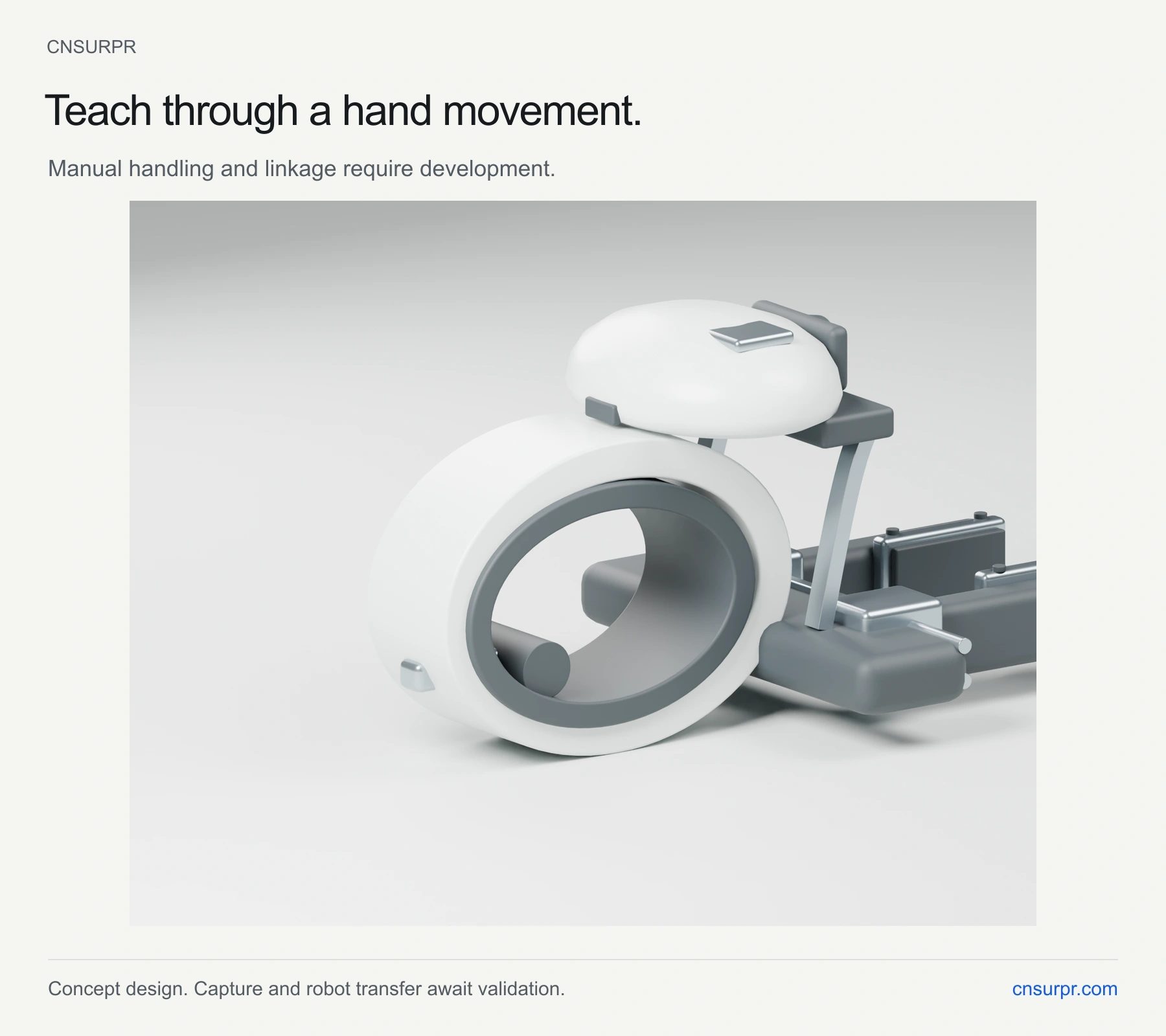
A manual teaching gesture
The palm loop and trigger are a handling study. There is no tested linkage or verified ergonomic claim.
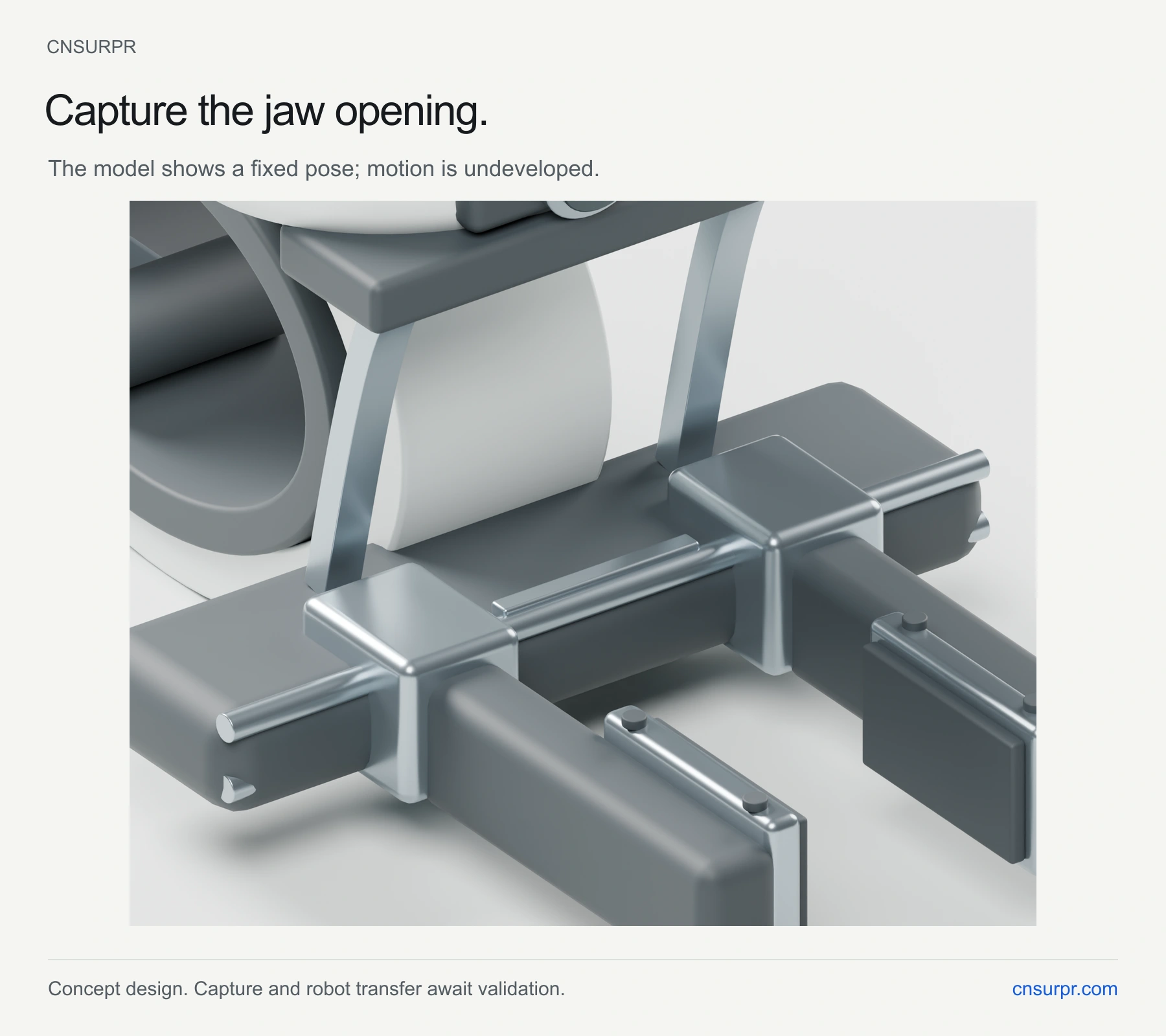
Jaw width as a recorded signal
Guides and carriers indicate a parallel-jaw target. The model shows a fixed pose, not validated motion or an operating encoder.
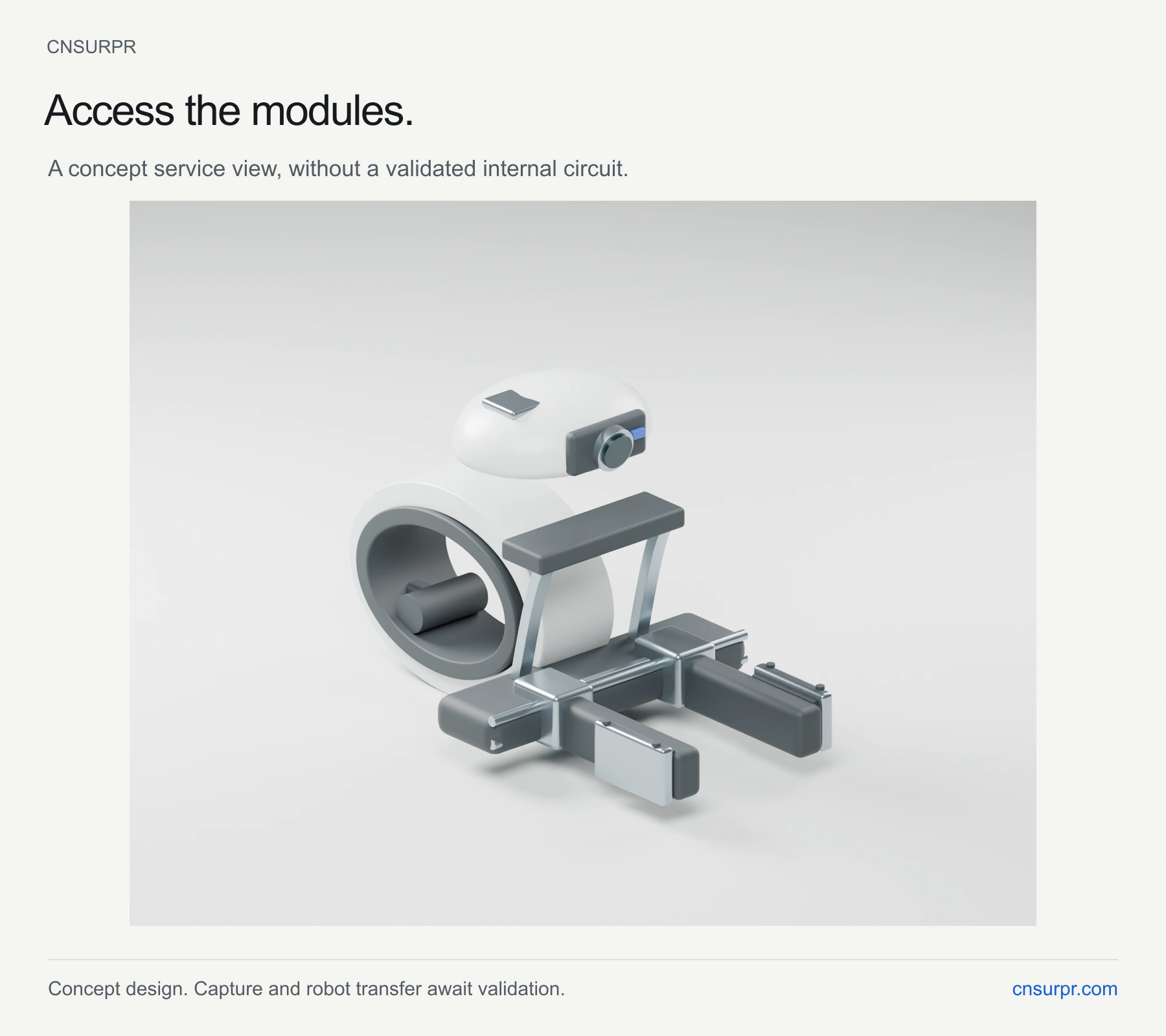
A readable service route
Lifted parts come from this appearance version. The view does not reveal a validated internal PCB, fastening plan or assembly sequence.
A development route grounded in hardware
Appearance envelope 110 × 178 × 92.5 mm; the fixed display opening is about 28.8 mm. The 0–70 mm jaw-opening range remains a design target. Proposed RGB, IMU, jaw-width and tactile readouts use wired USB host capture. Internal packing, transmission, time alignment, calibration and robot transfer are undeveloped.
The next two planning windows
30–90 days: compare valid demonstrations per hour, time alignment, tracking loss and recalibration for three controlled light-object tasks. 3–6 months: test one matched robot and repeat buyer use. Reduce scope if existing tools capture equally usable data with less effort. These are qualitative scenarios, not a sales forecast.
What could weaken the opportunity?
UMI, tactile research grippers and UR/Scale AI already address important parts of this workflow. Low-cost kits and leader–follower robots are alternatives. Tracking failure, calibration effort and a small unmeasured buyer segment could outweigh the benefit of a new instrument.
Manufacturing brief
Materials and assembly
Proposed PA12 or PC/ABS housing, metal guides/bridges, replaceable elastic contact skins and grip. Start with printed/CNC parts. The shell is an exterior study, without a verified cavity, wall thickness, seals or tolerances.
Functional BOM route
RGB camera, IMU, jaw-width encoder, two tactile skins/readout boards, USB capture and clock/record control, status indication, manual return and guides. Host processing comes before any learned policy. There is no battery, wireless or autonomous actuator in this appearance proposal.
Sourcing and cost gaps
No live stock, component, tooling, transport, testing or assembly quote has been obtained. Published board dimensions are references, not proof of fit. No price, MOQ or delivery date is offered.
Benchmarks and admission tasks
Compare usable demonstrations and recalibration burden against existing tools. Measure tracking, dropped frames, time drift, jaw parallelism, cable pullout and tactile wear/zero drift. Electrical, EMC, materials, data and destination classification remain open. This is a civilian research-input concept with no market approval claim.
Code, hardware and model rights
UMI root code is MIT and LeRobot root code Apache-2.0. OpenTac code is MIT and its hardware CERN-OHL-P-2.0. The UMI-referenced ORB-SLAM3 fork is GPLv3; integration obligations remain open. DIGIT noncommercial manufacturing files are excluded. FARM project code was still marked coming soon on 18 November. Third-party models, data and robot meshes require their own checks; none were trained or adopted.
Questions before a sourcing brief
Does the device already train or control a robot?
No hardware capture or robot transfer has been validated. The appearance illustrates a proposed input instrument; processing, task data and robot matching still need development.
Is tactile sensing a new invention here?
Existing UMI, tactile research systems and commercial trainers provide prior approaches. We propose to compare cartridge service, calibration continuity and data-quality workflows; benefits are unmeasured.
Are the sensing streams already synchronized?
Synchronization is a development task. Sensor sampling timestamps, host arrival times, drift and missing frames must be measured separately. A USB connection alone does not prove synchronization.
Can I order it now?
This is concept development. Price, supply, MOQ, lead time, performance and certification are unconfirmed. Contact the team to discuss a research brief.
What can the design demonstrate today?
The images and interactive geometry demonstrate one consistent original appearance and service concept. Proposed functions, power, lifetime and production require prototype evidence. Price, MOQ and lead time remain unconfirmed.
How reliable is the growth forecast?
This is a forward design thesis informed by public shipment, issuer and developer evidence. These sources measure different populations. We will revisit the thesis after 30, 60 and 90 days, including counterexamples and product-use evidence.
How are search and AI discovery addressed?
The page answers product and sourcing questions with paired language URLs, dated evidence and consistent technical descriptions. The phrases below are research candidates whose search volumes remain unverified.
visuotactile demonstration gripper · robot demonstration data capture · replaceable tactile sensor
Evidence reviewed 2026-11-20
2025 industrial robot installations. Regions vary: US grew, Japan and Germany declined. This macro context is not a handheld-device market estimate. Reviewed 20 Nov.
IFR · 24 Sep 2026 ↗Issuer Robotics revenue includes cobots/mobile robots. It provides no trainer-unit series. Reviewed 20 Nov; exact publication timestamp was not exposed in the retrieved text.
Teradyne · Q3 fiscal 2026 ↗Commercial training-system announcement and strong competitive counterexample. Same corporate family as Teradyne. Reviewed 18 Nov; 19 Nov refetch timed out.
Universal Robots · 16 Mar 2026 ↗Handheld teaching reference; upstream README describes SLAM as fragile. No UMI runtime tested by our team.
UMI · primary project and code ↗Customizable tactile-skin route, with code and hardware licensed separately. No own-board fabrication, calibration or stock verification.
OpenTac · code and hardware ↗Software-ecosystem evidence, not sales. Models and data have independent rights and computing requirements.
LeRobot · release 0.7.0, 5 Nov 2026 ↗Force/tactile teaching prior work. Inspected project code links were coming soon on 18 November, so it is not a ready adopted implementation.
FARM · availability check ↗