· FUTURE CONCEPT
PRISM AirModular AI eyewear
A phone-assisted, continuous optical shield with replaceable temple modules and a visible camera shutter. Designed around optical fitting, everyday audio and serviceability.
Original design · Prototype validation pending
View the design poster ↗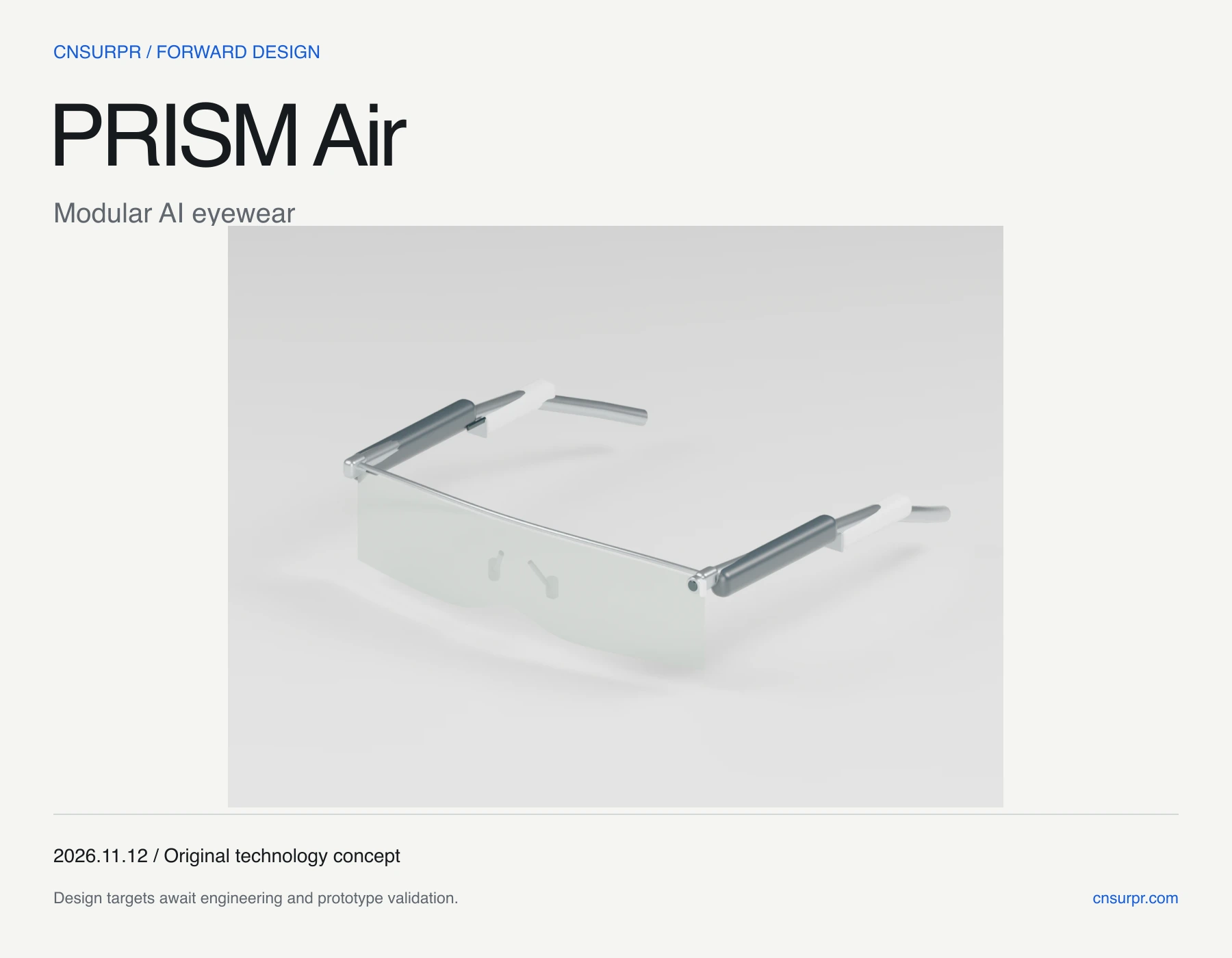
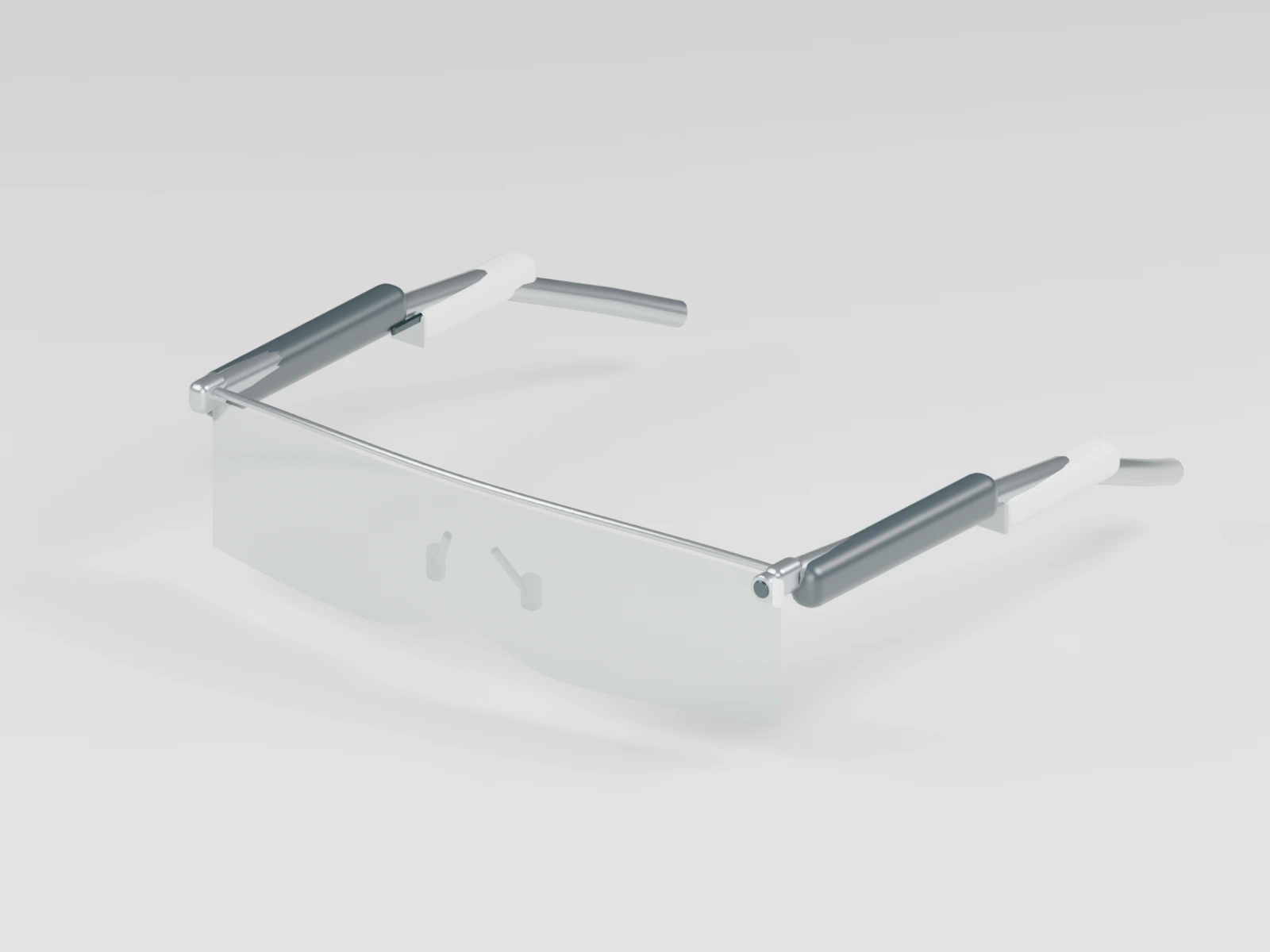 DESIGN STUDY · v0.1
Drag to orbit, or use the buttons. No automatic motion. Geometry illustrates an idea; it is not a validated assembly.
Why design ahead in this category?
Display-less glasses are becoming a larger part of the eyewear market. We see an opening for frames that make privacy and long-term service easier to understand. The opportunity depends on real buyer preference for those features.
Display-less share of XR shipments
61.9% → 70.3%IDC · Q2 2025 to Q2 2026 · +8.4 percentage points. Combined XR headset/glasses denominator.
Read source ↗Wearables revenue growth
+20%EssilorLuxottica · Q3 2026 YoY at constant currency. Includes AI glasses and Nuance Audio.
Read source ↗Open-source software signal
2,421MentraOS GitHub stars · snapshot 12 Nov 2026. Developer attention, with hardware integration still to test.
Read source ↗Change +8.4 percentage points. Source · IDC, 16 September 2026.
The product advantage to test
Proposed differentiation combines an optician-friendly frame, separately serviced power modules and a shutter whose position can be checked by eye. Fit, replacement reliability and repair cost are comparison targets for the first prototype.
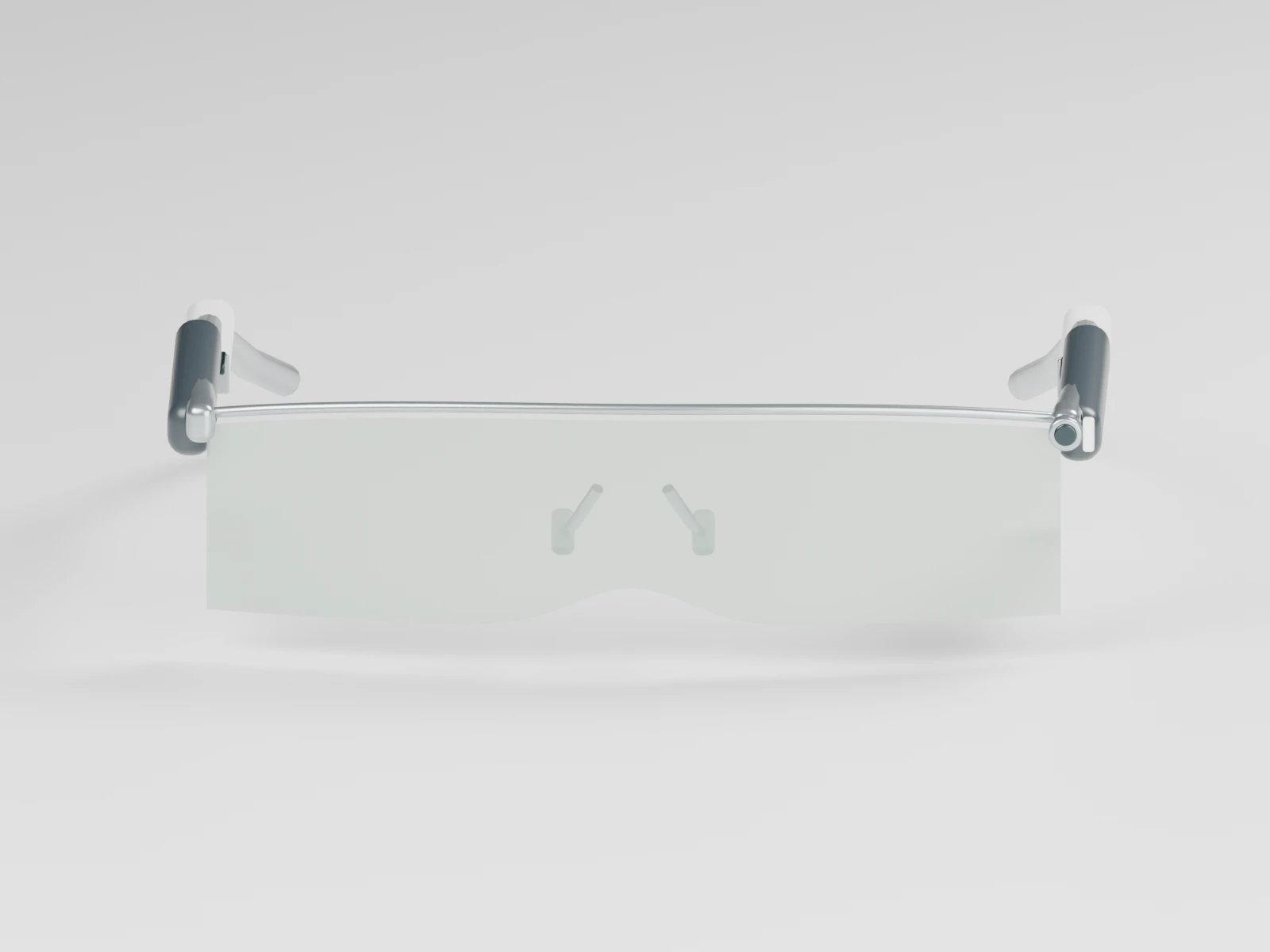
Prescription-ready frame study
A fine metal brow supports a continuous transparent shield. A prescription insert is a separate development task.
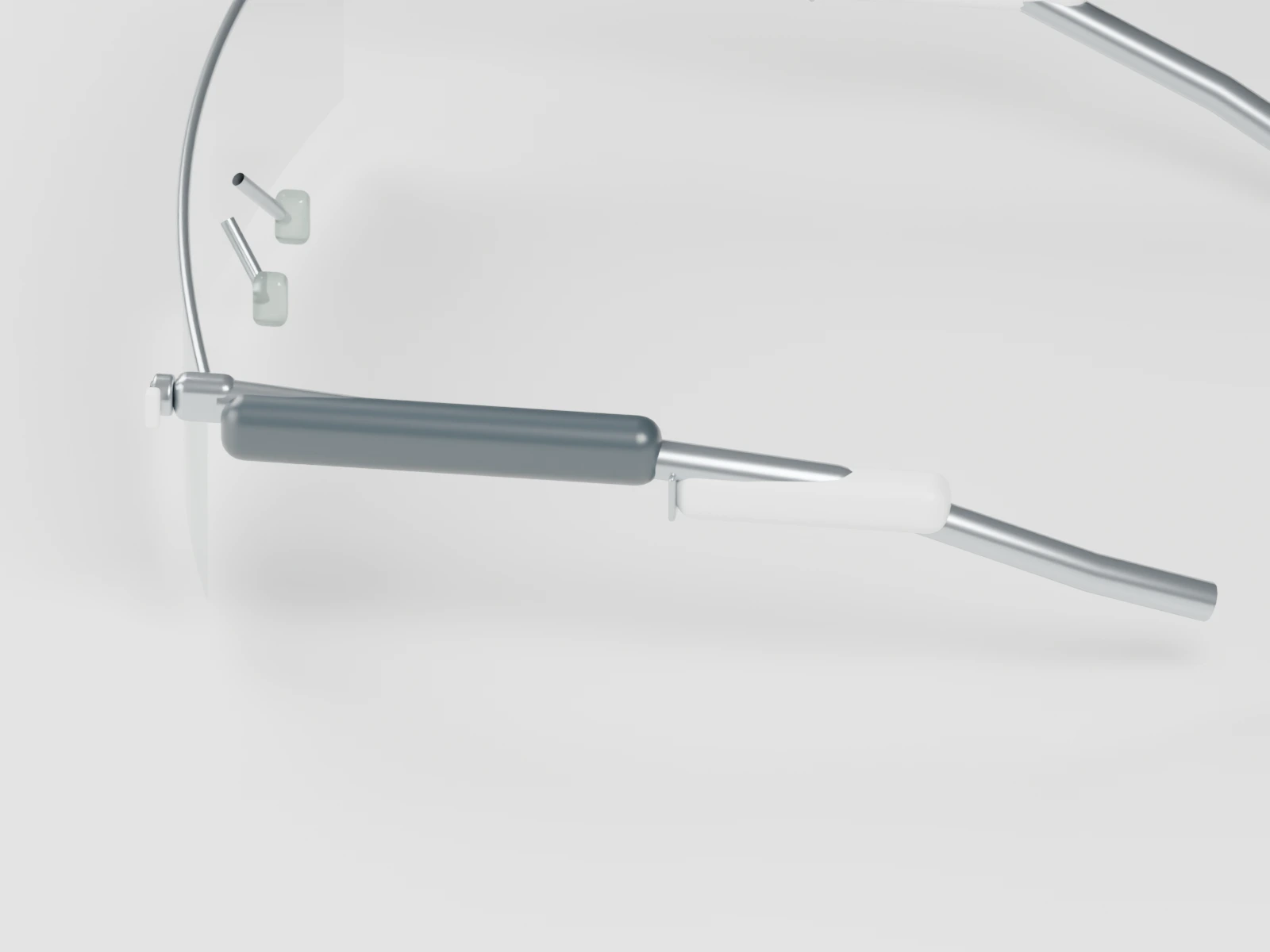
Electronics along the temple
Proposed audio, controls and connectivity occupy the side module. This is a packaging study.
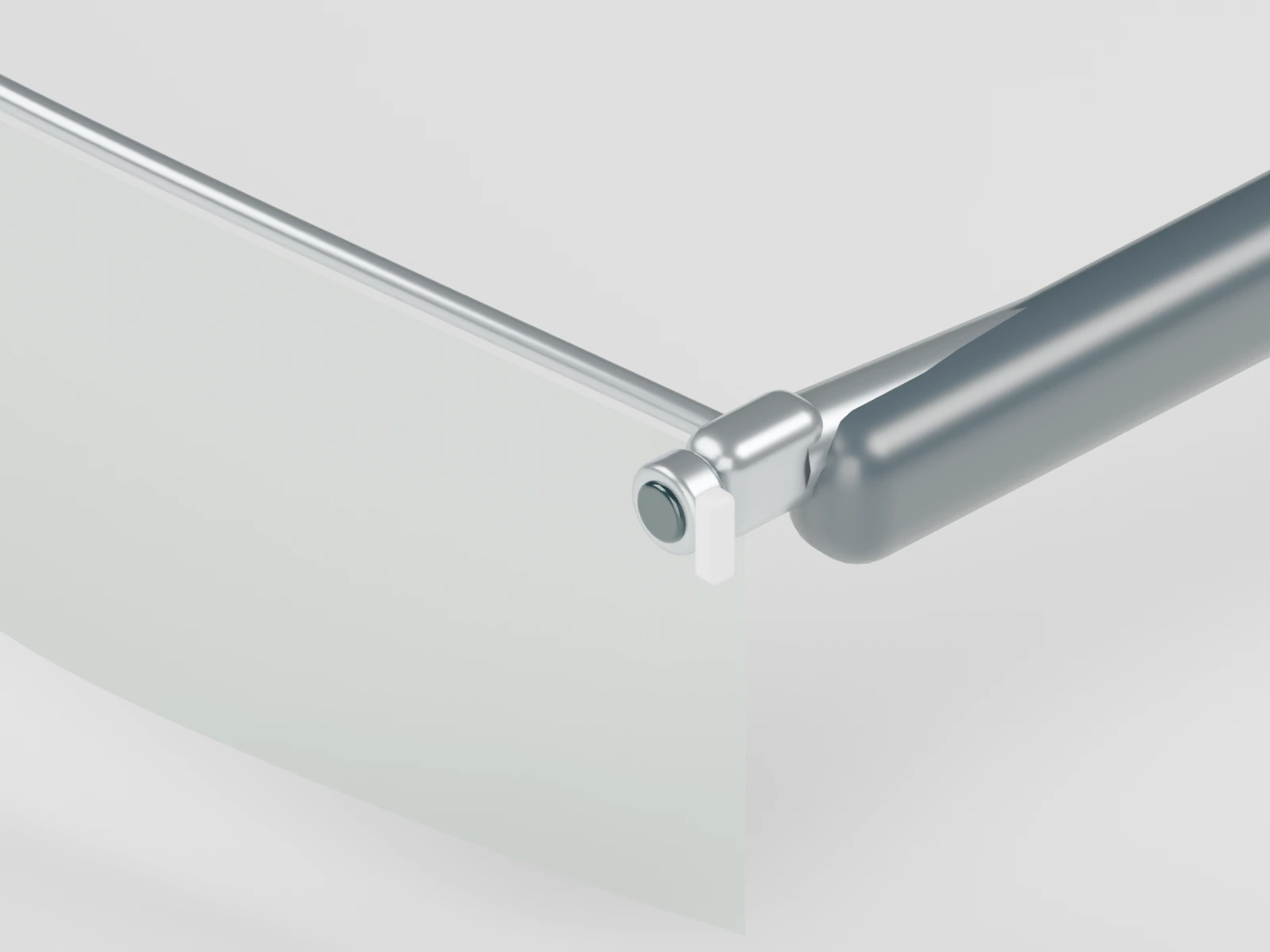
Privacy you can see
A discreet porcelain tab marks the proposed physical camera shutter. Hardware sensing and recording indicators need testing.
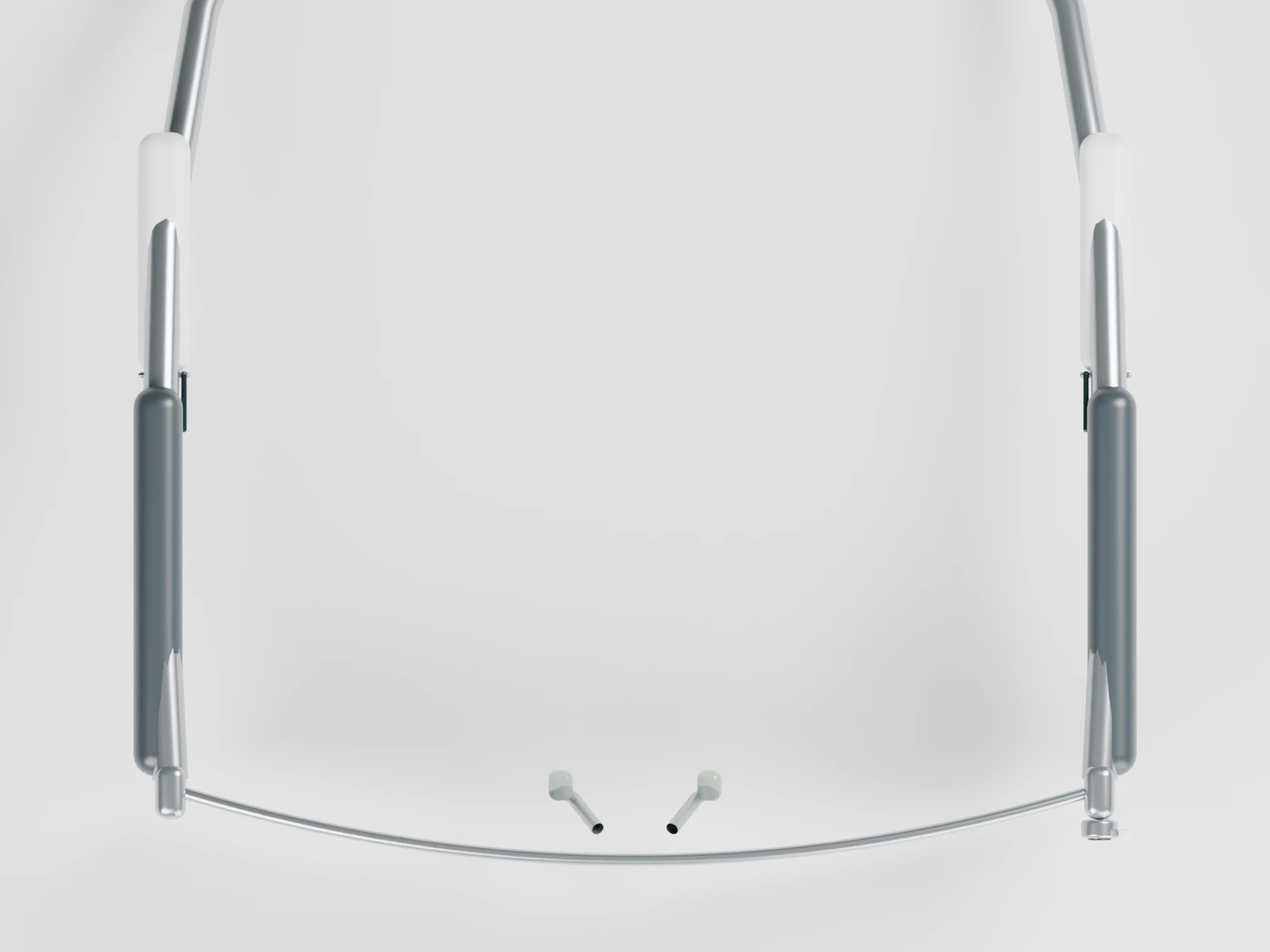
Balance across both sides
Battery and processing placement must balance heat and weight against the nose and ears.
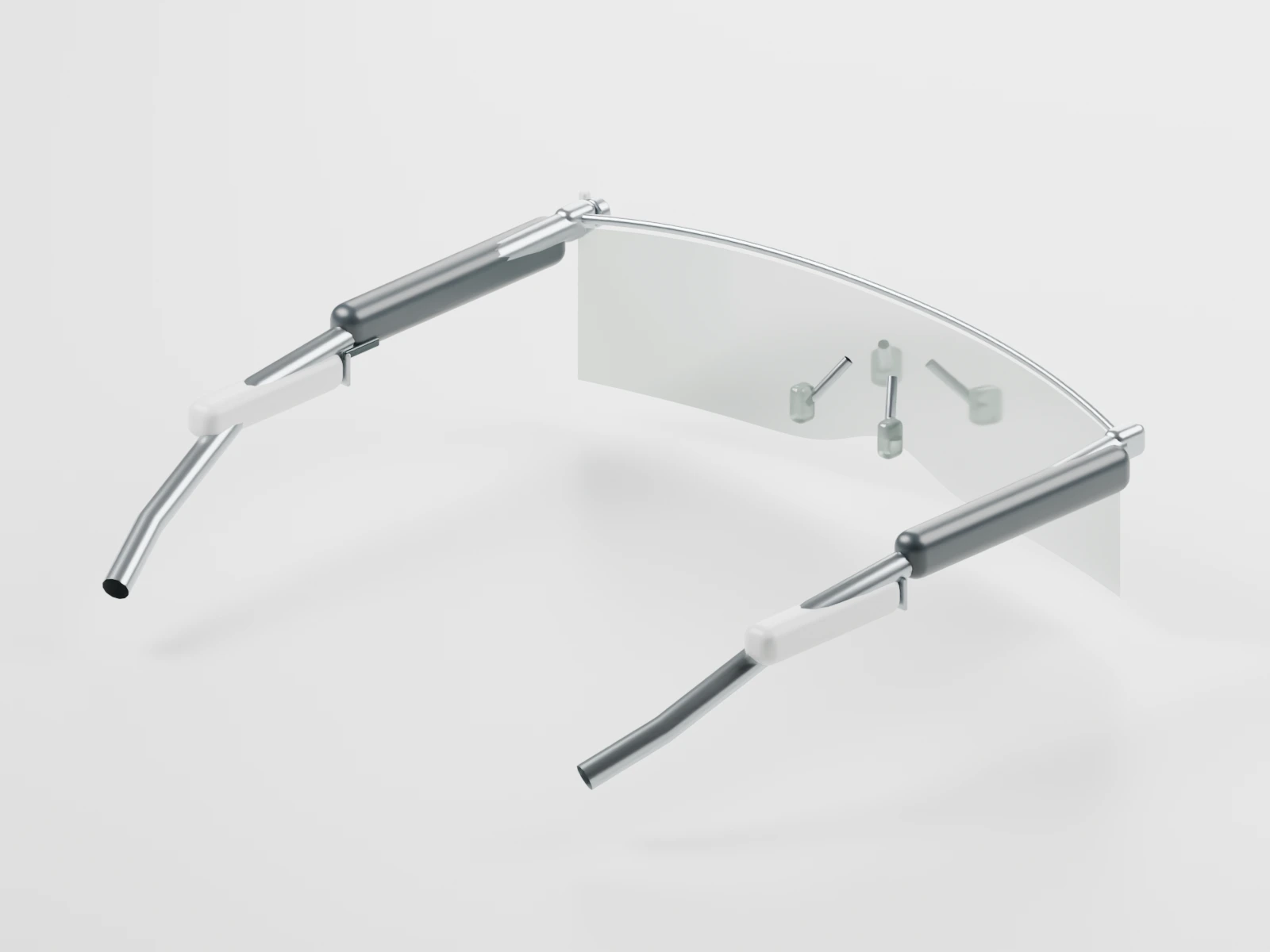
Everyday contact surfaces
Rounded earpieces and replaceable contact parts are proposed for repeated fitting trials.
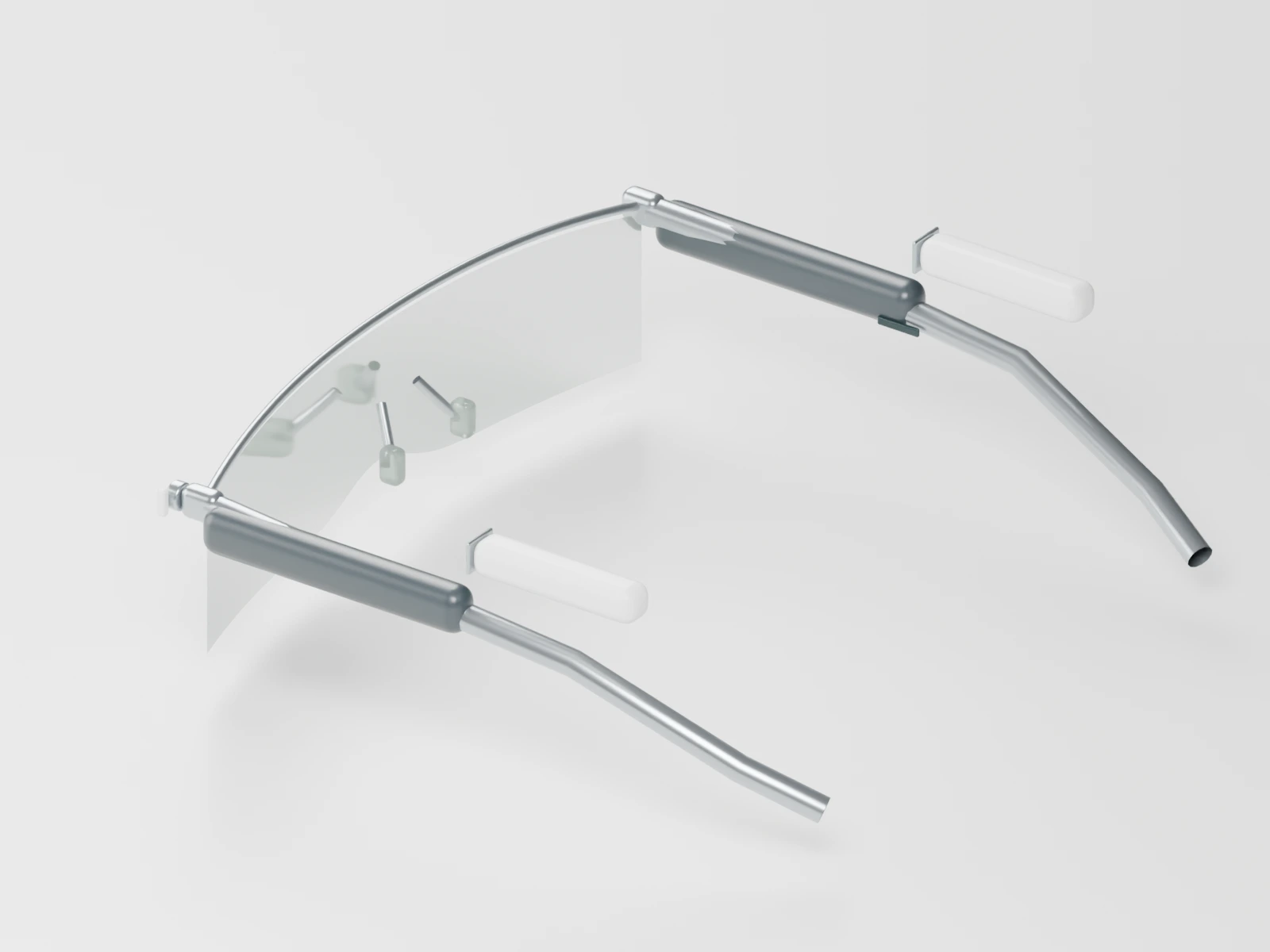
Service the power modules
The raised caps illustrate access. Connector geometry, sealing and fastening have yet to be engineered.
A development route grounded in hardware
Appearance envelope about 162 × 156 × 40 mm; mass target ≤65 g. Titanium or stainless brow, a transparent optical shield, polymer temples, camera, MEMS microphones, open-ear audio and phone-side AI. Battery life, thermal limits, connector life, privacy detection, sourcing and wireless/optical requirements await validation.
The next two planning windows
30–90 days: compare fit, shutter visibility and maintenance preference with existing frames. 3–6 months: test phone-side tasks, repeat use and paid sample interest. Reconsider if serviceability adds bulk without buyer value.
What could weaken the opportunity?
IDC also records a slowdown in the broader category’s growth and a strong incumbent distribution advantage. Existing glasses, phones and earbuds compete for the same budget. A serviceable frame needs to earn its extra size and connector cost.
Questions before a sourcing brief
What can the design demonstrate today?
The images and interactive geometry demonstrate one consistent original appearance and service concept. Proposed functions, power, lifetime and production require prototype evidence. Price, MOQ and lead time remain unconfirmed.
How reliable is the growth forecast?
This is a forward design thesis informed by public shipment, issuer and developer evidence. These sources measure different populations. We will revisit the thesis after 30, 60 and 90 days, including counterexamples and product-use evidence.
How are search and AI discovery addressed?
The page answers product and sourcing questions with paired language URLs, dated evidence and consistent technical descriptions. The phrases below are research candidates whose search volumes remain unverified.
modular AI glasses · repairable smart glasses · camera privacy shutter · phone-assisted multimodal eyewear
Evidence reviewed 2026-11-12
Q2 2026 shipment mix and broader-category growth. Category forecasts cannot be assigned to PRISM Air sales.
IDC · 16 Sep 2026 ↗Issuer-reported Q3 wearables revenue. Business scope includes Nuance Audio.
EssilorLuxottica · 20 Oct 2026 ↗Current software ecosystem reference. Code and hardware/model licenses require separate checks before integration.
MentraOS ↗